
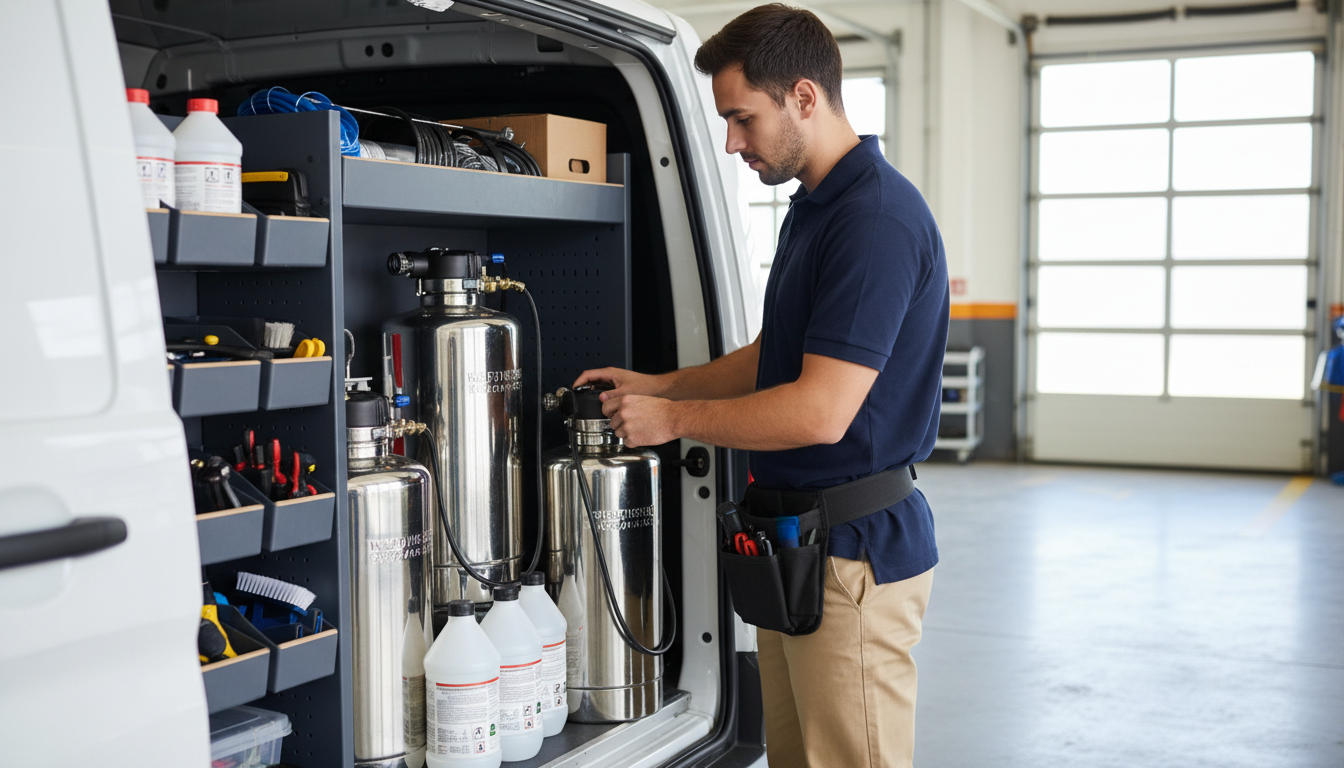
How to Start a Pest Control Business: The Complete Step-by-Step Guide
Over the past two decades, hundreds of people have entered the pest control industry. Some built thriving operations pulling in seven figures within five years. Others burned through their savings in eighteen months and went back to working for someone else. The difference almost never came down to talent or luck. It came down to preparation.
The pest control industry generated over $23 billion in revenue in 2024, and it's growing at 5-6% annually. Urbanization, climate shifts, and tightening health regulations keep driving demand higher. If you're considering starting a pest control business, the market fundamentals are firmly in your favor. But a growing market doesn't guarantee your success — your execution does.
$23B+
Annual U.S. Pest Control Industry Revenue (2024)
This guide walks you through every step of launching a pest control company, from licensing to landing your first customer. No fluff — just what actually works.
Step 1: Understand What You're Getting Into
Before you spend a dollar, get honest about the pest control business model. Here's the reality:
- It's physically demanding. You'll crawl through attics in 120-degree heat, squeeze into crawlspaces, and handle chemicals that require careful attention to safety protocols.
- Seasonality is real. In most markets, spring and summer drive 60-70% of annual revenue. You need a plan for winter cash flow.
- Recurring revenue is everything. One-time treatments keep the lights on. Recurring service contracts build wealth.
- Licensing requirements are strict. Unlike many service businesses, you can't just print business cards and start knocking on doors.
The good news? Net profit margins in pest control typically run 15-20%, which is excellent for a service business. The three largest publicly traded pest control companies in the U.S. reported margins between 15.7% and 19.5% in recent years. And unlike restaurants or retail, you don't need a physical storefront — many successful operators run the business from a home office for the first few years.
Step 2: Get Licensed and Certified
This is the non-negotiable foundation. Every state requires pest control operators to hold specific licenses before applying pesticides commercially. The process varies by state, but here's the general framework:
EPA Certification Categories
The Environmental Protection Agency (EPA) establishes federal standards for pesticide applicator certification. There are 10 federal categories, but for a pest control business, the most relevant is Category 7: Industrial, Institutional, and Structural Pest Control — this covers residential and commercial pest management.
States implement their own certification programs based on these federal standards. You'll typically need to:
- Complete a state-approved training program — usually 40-80 hours of coursework
- Pass the state certification exam — covering pesticide safety, application methods, pest identification, and regulations
- Apply for your business license — separate from your applicator certification
- Obtain a business operator license — most states require this in addition to individual applicator certification
Important
As of November 2024, updated federal certification and training regulations went into effect, enhancing pesticide safety training standards and setting stricter requirements for supervising non-certified applicators. Check with your state's pesticide regulatory agency for the latest requirements before beginning the licensing process.
The timeline from start to finish is typically 3-6 months. Don't try to rush this — plan your launch date accordingly. For a detailed breakdown of what your specific state requires, read our complete state-by-state licensing guide.
Step 3: Choose Your Business Structure
Most pest control startups should form an LLC (Limited Liability Company). Here's why:
- Liability protection. You're applying chemicals to people's homes. If something goes wrong — and in a long enough career, something will — you need personal asset protection.
- Tax flexibility. An LLC can elect S-Corp taxation once revenue justifies it (usually around $40K-$50K in net income), saving you significant self-employment taxes.
- Credibility. Commercial accounts and property managers will take you more seriously as an LLC than a sole proprietorship.
File your LLC through your Secretary of State's office. Cost ranges from $50 to $500 depending on the state. Then get your EIN (Employer Identification Number) from the IRS — it's free and takes five minutes online.
Step 4: Calculate Your True Startup Costs
There are wildly inaccurate numbers thrown around online. Here's what it actually costs to launch a pest control business in 2026, based on real operator experiences:
Bare-Bones Solo Operation: $10,000-$15,000
| Expense | Cost Range |
|---|---|
| Licensing & exam fees | $300 - $1,000 |
| LLC formation & business permits | $200 - $600 |
| Insurance (first year) | $2,000 - $4,000 |
| Basic equipment (sprayer, hand tools, PPE) | $2,000 - $4,000 |
| Initial chemical inventory | $1,000 - $2,000 |
| Vehicle lettering/wrap | $500 - $2,500 |
| Website & basic marketing | $1,000 - $3,000 |
| Software (CRM, routing, invoicing) | $50 - $200/mo |
Professional Launch: $25,000-$50,000
This adds a dedicated service vehicle ($15,000-$25,000 used), a more complete equipment setup, professional branding, and 3-6 months of operating cash reserve. This is the range most industry advisors recommend if you can swing it.
Pro Tip
Don't buy a brand-new truck. A clean, reliable used truck or van with low mileage will do the job for half the cost. Wrap it with professional graphics — that $2,000 vehicle wrap generates more leads per dollar than almost any other marketing spend in your first year.
Essential Equipment Checklist
- B&G hand sprayer (the industry workhorse)
- Backpack sprayer for exterior treatments
- Bait gun and bait stations
- Dust applicator
- Flashlight and inspection mirror
- Full PPE: respirator, chemical-resistant gloves, safety glasses, coveralls
- Ladder (6-foot minimum)
- Rodent traps and exclusion materials
- Termite treatment equipment (if offering WDO services)
Step 5: Get Properly Insured
Insurance isn't optional — it's legally required in most states, and no serious commercial account will hire you without proof of coverage. Here's what you need:
$1,400/yr
Avg. General Liability
$1,070/yr
Avg. Workers' Comp
$520/yr
Avg. Professional Liability
- General Liability Insurance: $1,000-$2,000/year. Covers property damage and bodily injury claims. This is your most critical policy.
- Commercial Auto Insurance: Required for any vehicle used for business purposes.
- Workers' Compensation: Required in most states as soon as you hire your first employee.
- Pollution Liability: Covers environmental damage from pesticide applications. Not always required but highly recommended.
- Surety Bond: Many states require this as part of the licensing process.
For a deeper breakdown, check our guide to pest control insurance requirements.
Step 6: Set Up Your Operations
Choose Your Service Area
Start with a 20-30 mile radius from your base. Tight routes mean more jobs per day and lower fuel costs. As you grow, you can expand — but early on, route density is more valuable than territory size. Our guide on route optimization goes deeper on this.
Pick Your Services
Don't try to do everything on day one. Start with the highest-demand, most straightforward services:
- General pest control (ants, roaches, spiders, occasional invaders) — this is your bread and butter
- Rodent control — high demand, good margins
- Mosquito/tick treatments — seasonal but lucrative add-on
Add termite, wildlife exclusion, and bed bug services later as you build expertise and capital. Termite work especially requires additional licensing in most states and more expensive equipment.
Invest in Software From Day One
Don't start with paper invoices and a spreadsheet. Modern pest control software handles scheduling, routing, invoicing, CRM, and customer communication for $50-200/month. The time savings pay for themselves within the first week. Popular options include PestPac, FieldRoutes, GorillaDesk, and Briostack.
Step 7: Price Your Services Correctly
Underpricing is the number-one mistake new pest control operators make. They look at what the big companies charge and try to undercut them by 30-40%. This is a race to the bottom that kills businesses.
Your prices need to cover:
- Chemical/material cost for the job
- Your time (including drive time)
- Vehicle and equipment wear
- Insurance and licensing overhead
- A profit margin of at least 15-20%
For residential general pest control in 2026, most markets support $150-$250 for initial treatments and $40-$70/month for recurring service. Read our full guide on how to price pest control services before you set your rates.
Step 8: Get Your First Customers
This is where most new operators stall. You have the license, the truck, the equipment — but no customers. Here's what works fastest:
Immediate Revenue Generators (Week 1-4)
- Google Business Profile. Set this up immediately. Optimize it with photos, services, and your service area. This is free and generates calls faster than anything else.
- Door-to-door in your neighborhood. Leave door hangers on every house within 2 miles of your base. This is old-school but it works — especially in spring.
- Nextdoor and local Facebook groups. Introduce yourself. Offer a first-service discount. Respond to every "anyone know a good pest control company?" post.
- Partner with real estate agents and property managers. They need pest inspections and clearance letters constantly. One good real estate contact can feed you 5-10 jobs per month.
Long-Term Growth (Month 2-12)
- SEO and a professional website. Local SEO is the highest-ROI marketing channel in pest control. Get your site ranking for "[city] pest control" and the phone rings on its own.
- Google Local Service Ads. Pay-per-lead, not pay-per-click. Excellent ROI for new operators because you only pay for actual calls.
- Review generation. After every job, ask for a Google review. Operators with 50+ reviews and a 4.8+ rating dominate local search results.
For a comprehensive playbook, read our pest control marketing strategies guide.
Pro Tip
Your first 30 customers are the hardest to get. Your second 30 come from referrals from the first 30. Over-deliver on service quality early on — it compounds faster than any ad spend.
Step 9: Build Toward Recurring Revenue
The most important shift in your business model happens when you move from one-time treatments to recurring service agreements. Here's why this matters so much:
- A one-time customer is worth $150-$300. A recurring customer is worth $500-$900/year — and the average retention is 3-5 years. That's $1,500-$4,500 in lifetime value.
- Businesses with over 80% recurring revenue sell for 50-75% higher multiples than those relying on one-time jobs.
- Predictable monthly revenue lets you hire technicians, invest in marketing, and sleep at night.
Start offering quarterly service plans from day one. Price them attractively — the long-term value far exceeds the one-time treatment revenue you're "giving up."
Step 10: Avoid These Common Mistakes
Key Takeaway
The operators who fail usually don't fail because of lack of demand. They fail because of underpricing, poor cash management, or trying to scale before the foundation is solid.
- Underpricing to "get in the door." You'll attract price-sensitive customers who churn the fastest and complain the most.
- Skipping the business plan. You don't need 50 pages, but you need realistic revenue projections, expense forecasts, and a 12-month cash flow plan.
- Hiring too fast. Don't add a technician until you're personally booked solid for 2-3 weeks straight. Premature hiring burns cash faster than anything.
- Ignoring continuing education. Regulations change. Products change. Stay current or risk fines and license suspension.
- No written contracts. Every recurring customer should sign a service agreement. It protects you and sets expectations.
- Neglecting online reputation. In 2026, 90%+ of customers Google you before calling. If you have 3 reviews and a 3.5-star rating, you've lost before you started.
Timeline: From Idea to First Customer
| Phase | Timeline | Key Actions |
|---|---|---|
| Research & Planning | Weeks 1-4 | Market research, business plan, financial projections |
| Licensing & Certification | Weeks 4-16 | Training, exam prep, exam, license application |
| Business Setup | Weeks 12-16 | LLC, insurance, equipment, vehicle, software |
| Pre-Launch Marketing | Weeks 14-18 | Website, Google Business Profile, branding |
| Launch | Week 18-20 | First customers, refine operations, build reviews |
Realistically, plan on 4-5 months from the day you decide to start until your first paying customer. Some states with faster licensing processes can cut this to 2-3 months.
Is It Worth It?
Absolutely — if you go in with realistic expectations and a solid plan. Solo operators commonly earn $75,000-$120,000 in their second or third year. Multi-truck operations with 3-5 technicians can generate $500,000-$1M+ in revenue with owner's compensation of $150,000-$250,000. And if you eventually want to exit, pest control businesses with strong recurring revenue and clean books sell for 3-6x EBITDA. That could mean a seven-figure payday from a business you started with $15,000.
Curious about what your future business could be worth? Try our free Valuation Calculator to model different scenarios. And if you want to see how other pest control companies in your area operate, browse our directory of 30,000+ pest control companies to study the competitive landscape.
The pest control industry rewards people who show up prepared, deliver consistently, and think long-term. If that sounds like you, there's never been a better time to start.
Related Articles
Why Pest Control Companies Are Booming: Industry Trends for 2026
Key Takeaways The U.S. pest control industry generates over $24 billion in annual revenue and has ...

Pest Control for New Homeowners: Your First-Year Checklist
Key Takeaways Schedule a professional pest inspection within the first 30 days of homeownership — ...
How Much Does Pest Control Cost in 2026? A Complete Pricing Guide
Key Takeaways The average one-time pest control treatment costs $150–$350, while quarterly service...