
How to Get Rid of Wasps & Hornets: Safe Removal Guide
Vespidae
How to Identify Wasps & Hornets
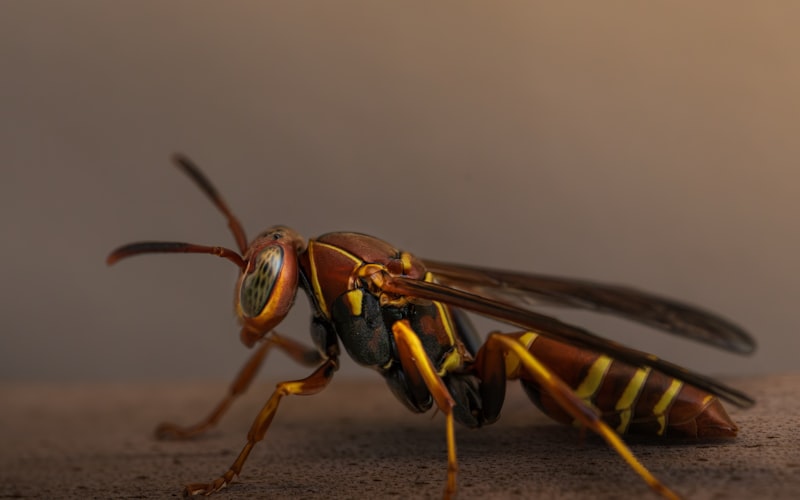
Paper wasps are slender, 3/4-1 inch long, with long legs that dangle during flight. They are brown with yellow or red markings and build small, open, umbrella-shaped nests with visible hexagonal cells. They are generally non-aggressive unless the nest is disturbed and are commonly found under eaves, porch ceilings, and deck railings.
Yellow jackets are stocky, about 1/2 inch long, with bright yellow and black banding. They are the most aggressive common wasp species. They nest underground (most commonly), in wall voids, and in other enclosed spaces. Yellow jackets are attracted to sweet foods and proteins and are the wasps most likely to sting people at outdoor meals and events.
Bald-faced hornets are large (3/4 inch), black with white facial markings, and build large, enclosed, football-shaped paper nests in trees, shrubs, and on structures. They are very aggressive when their nest is threatened. European hornets are the largest (1-1.5 inches), brown with yellow markings, and are the only true hornet in the U.S. They build nests in hollow trees, wall voids, and attics, and are notably active at night.
Signs of a Wasps & Hornets Infestation
The most obvious sign is seeing wasps or hornets flying around a particular area consistently. Follow their flight path to locate the nest - they will fly in a direct line between the nest and food sources. Nests are often hidden, so watch for wasps entering and exiting a specific point repeatedly.
Paper wasp nests are small and easy to spot under eaves and overhangs. Yellow jacket nests are usually underground - look for wasps entering and exiting holes in the ground, typically in old rodent burrows, along fence lines, or at the base of trees. Wall void nests may be indicated by wasps entering gaps in siding, soffits, or weep holes.
In late summer and fall, wasp populations peak and become more aggressive as the colony produces new queens and food becomes scarce. This is when most stinging incidents occur. You may notice increased wasp activity around garbage cans, fruit trees, outdoor dining areas, and pet food bowls. Finding dead wasps inside your home (near windows) can indicate a nest inside the wall void.
Health & Property Risks
Wasp and hornet stings are painful and, for allergic individuals, potentially life-threatening. Anaphylaxis from stings affects an estimated 5% of the population and causes approximately 60-80 deaths per year in the United States. Anyone who has had a severe reaction to a sting should carry an epinephrine auto-injector (EpiPen) and seek immediate medical attention if stung.
Even without allergies, multiple stings can cause serious reactions. Yellow jackets and hornets can sting repeatedly (unlike bees) and release alarm pheromones that attract other colony members to join the attack. A nest with hundreds of workers can deliver dozens of stings in seconds if disturbed. Children and pets are particularly vulnerable because they may accidentally disturb hidden ground nests.
Nests in or near structures can cause secondary problems. Yellow jackets and hornets in wall voids can chew through drywall to enter living spaces. Large nests can stain ceilings and walls. When nests are abandoned in fall, the dead insects and nest material can attract carpet beetles and other secondary pests. Nests near entrances, play areas, and high-traffic zones pose ongoing safety hazards throughout the active season.
DIY vs. Professional Treatment
Small paper wasp nests (fewer than 20-30 cells) that are easily accessible can often be handled with a wasp freeze spray applied at dusk or dawn when wasps are less active and all inside the nest. Stand at the maximum spray distance recommended on the product label. After the wasps are dead, knock down and discard the nest.
Do NOT attempt DIY removal of: yellow jacket ground nests (highly aggressive with hundreds of workers), bald-faced hornet nests (extremely aggressive), large paper wasp nests, nests in wall voids or enclosed spaces, or any nest if you or a family member has a known allergy to stings. These situations carry significant risk of mass stinging events.
Professional removal is strongly recommended for most wasp and hornet problems. Professionals have protective equipment, specialized products, and the experience to safely treat nests in difficult locations. They can treat ground nests, wall void nests, and elevated nests that require ladder work. Treatment typically involves applying insecticidal dust or aerosol directly into the nest, ensuring complete colony elimination. Most professionals can treat nests the same day or next day during active season.
Prevention Tips
In early spring, inspect your home's exterior for small, newly started nests (just a queen and a few cells). Removing these early-stage nests is easy and prevents a full colony from establishing. Check under eaves, porch ceilings, deck railings, play equipment, mailboxes, and other sheltered locations monthly from April through June.
Seal potential nesting sites. Caulk gaps in siding and around window and door frames. Screen attic and soffit vents. Cap open pipe ends. Fill rodent burrows in the yard (potential yellow jacket nest sites). Keep garage doors closed when not in use. Wasps are attracted to sheltered voids, so eliminating access to these spaces reduces nesting opportunities.
Reduce attractants during wasp season. Keep trash cans tightly sealed. Clean up fallen fruit from trees. Do not leave pet food or sugary drinks outdoors. When eating outside, keep food covered until ready to serve. Avoid wearing strong fragrances outdoors. Wasp traps placed around the perimeter of outdoor dining areas can reduce nuisance wasps, though they are not effective at eliminating nests.
Treatment Costs
Professional wasp or hornet nest removal typically costs $100-$400 per nest. Simple, accessible paper wasp nests are at the low end ($100-$200), while yellow jacket ground nests or wall void nests cost $200-$400 due to the complexity and risk involved. Large bald-faced hornet nests, especially in elevated locations, can cost $300-$500 or more.
Emergency same-day service often carries a premium of $50-$100. If wasps have nested in a wall void, additional repair costs ($100-$500) may apply for patching holes used for treatment access. Seasonal wasp prevention programs (spring monitoring and early nest removal) cost $150-$300 for the season. Many general pest control plans include wasp nest removal as part of their coverage.
See our full Wasp & Hornet Removal Cost Guide for detailed pricing by nest type.
Frequently Asked Questions
What should I do if I get stung?
Remove the stinger if present (wasps usually do not leave stingers, but bees do). Clean the area, apply ice, and take an antihistamine for swelling. If you experience difficulty breathing, swelling of the face or throat, dizziness, or rapid heartbeat, call 911 immediately as these are signs of anaphylaxis.
Will wasps return to the same spot after nest removal?
Wasps may try to rebuild in the same location because the site has favorable characteristics. After removing a nest, clean the area thoroughly to remove pheromone traces. Consider applying a residual insecticide to the spot to deter rebuilding, or seal the area if possible.
What is the difference between wasps, hornets, and bees?
Wasps and hornets are predators with smooth bodies and can sting multiple times. Hornets are simply large wasps. Bees are hairy, primarily eat pollen and nectar, and most can only sting once. Bees (especially honeybees) are beneficial pollinators and should be relocated rather than killed when possible.
Get a Free Wasps & Hornets Treatment Quote
Answer a few questions about your pest problem and get an instant price estimate, then get matched with licensed professionals in your area.
Get a Free QuoteFind Wasps & Hornets Exterminators Near You
Browse our directory of licensed pest control professionals who specialize in wasps & hornets treatment.
Search DirectoryRelated Pest Guides
Mosquitoes
Reduce mosquitoes around your home with proven strategies. Learn about breeding prevention, yard treatments, repellents, and professional services.
Spiders
Control spiders in your home. Learn to identify dangerous vs. harmless species, reduce spider populations, and when professional help is needed.