
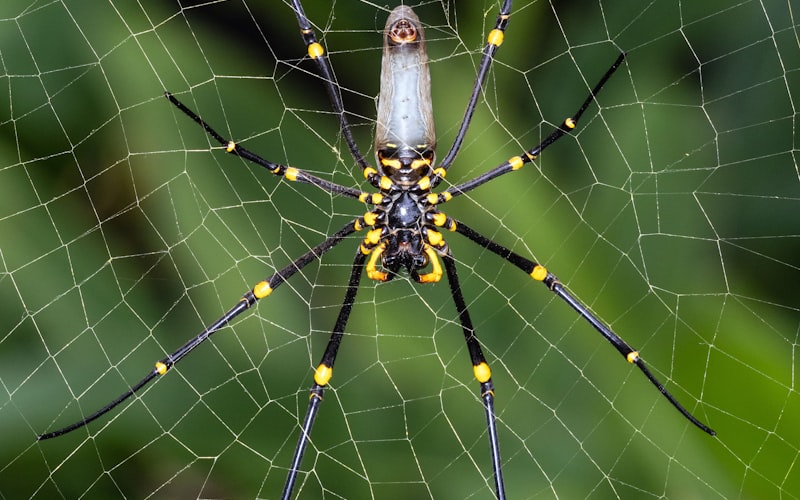
How to Get Rid of Spiders: Identification & Control Guide
Araneae
How to Identify Spiders
Spiders are arachnids (not insects) with eight legs, two body segments (cephalothorax and abdomen), and most species have eight eyes. There are over 3,000 spider species in North America, but only a handful are commonly found in homes. Most household spiders are harmless and actually beneficial, as they prey on insects.
Common harmless house spiders include cellar spiders (long, thin legs, messy webs in corners), cobweb spiders (build irregular webs in undisturbed areas), and wolf spiders (large, fast-moving ground hunters that look intimidating but are not dangerous). Jumping spiders are small, stocky, and have distinctive large front-facing eyes.
Two medically significant species deserve attention. Black widow spiders are shiny black with a red hourglass marking on the underside of the abdomen, building messy webs in undisturbed areas like garages, sheds, and woodpiles. Brown recluse spiders are light to medium brown with a dark violin-shaped marking on their back, found primarily in the south-central United States. Both species prefer secluded, undisturbed areas and bite only when threatened.
Signs of a Spiders Infestation
The most obvious sign is seeing webs. Different species build different web types: orb weavers create the classic circular webs, cobweb spiders build irregular tangles, and funnel weavers create sheet-like webs with a funnel retreat. Finding many webs, especially indoors, suggests a healthy spider population supported by abundant insect prey.
Seeing spiders themselves, particularly regularly and in multiple locations, indicates a population has established in your home. Spiders entering homes in fall are often males searching for mates. Finding egg sacs (round, silken pouches containing hundreds of eggs) means the population may be about to increase significantly.
An abundance of spiders actually tells you something important about your home: if spiders thrive inside, it is because they have a food supply - meaning you likely have other insect pests as well. Addressing the underlying insect problem often naturally reduces spider numbers. Pay attention to where you find spiders - basements, attics, garages, and closets are common harborage areas.
Health & Property Risks
The vast majority of spiders in your home are harmless. Common house spiders, cellar spiders, wolf spiders, and jumping spiders do not pose a medical risk. Their venom is not medically significant to humans, and most cannot even bite through human skin. These spiders are actually beneficial, consuming flies, mosquitoes, ants, and other pest insects.
Black widow bites can cause significant pain, muscle cramps, and systemic reactions. Symptoms typically include pain at the bite site spreading to the abdomen or entire body, nausea, sweating, and muscle rigidity. While rarely fatal (especially with medical treatment), bites require medical attention. Children, elderly, and those with compromised health are at greatest risk.
Brown recluse bites can cause necrotic skin lesions where tissue around the bite dies. Most bites heal on their own, but some develop into significant wounds requiring medical attention. It is worth noting that brown recluse spiders have a limited geographic range (primarily the south-central U.S.) and are frequently misidentified. If you suspect a bite from either species, seek medical attention and try to capture or photograph the spider for identification.
DIY vs. Professional Treatment
Spider control is one of the easier pest problems to handle yourself. Start by reducing their habitat and food supply. Regular cleaning eliminates webs and egg sacs. Reduce outdoor lighting near entrances (lights attract insects, which attract spiders). Seal cracks and gaps around windows, doors, and foundations. Declutter storage areas where spiders hide.
For active spider control, use a vacuum to remove spiders, webs, and egg sacs. Sticky traps placed along walls and in corners monitor and reduce spider populations. Residual insecticide sprays applied along baseboards, in corners, and around entry points can provide ongoing control. Concentrate on areas where spiders are commonly seen.
Call a professional when: you have identified black widows or brown recluse spiders on your property, spider populations are large despite DIY efforts, or you have a spider phobia that prevents you from handling the problem. Professionals apply targeted residual treatments inside and exterior barrier treatments, remove webs and egg sacs in hard-to-reach areas, and can identify and address the underlying insect populations that support spiders.
Prevention Tips
Reduce the insect population that spiders feed on. Seal entry points, fix screens, reduce outdoor lighting near doors, and address any other pest issues. Without a food source, spider populations naturally decline. Keep outdoor areas near the house clear of leaf litter, mulch buildup, and dense ground cover where spiders establish.
Inside, maintain a regular cleaning routine. Dust and vacuum corners, behind furniture, and in closets regularly. Remove webs promptly - this discourages spiders from staying and eliminates egg sacs before they hatch. Reduce clutter in basements, garages, and attics. Store items in sealed plastic bins rather than open cardboard boxes.
Outside, move firewood, rock piles, and debris away from the house. Keep vegetation trimmed back from the exterior. Install tight-fitting door sweeps and weather stripping. Repair or replace damaged window screens. Yellow or sodium vapor exterior lights attract fewer insects (and therefore fewer spiders) than standard white lights. A perimeter spray treatment in late summer can reduce fall spider migration into homes.
Treatment Costs
Professional spider treatment typically costs $100-$300 for a one-time service, which usually includes interior treatment, web removal, and exterior barrier spray. Regular pest control plans that include spider control along with other common pests cost $200-$500 per year with quarterly service visits.
If dangerous spiders (black widows or brown recluse) are involved, expect higher costs of $200-$500 for a thorough treatment as these require more careful inspection and targeted applications. Factors affecting price include the size of the home, severity of the spider population, whether dangerous species are present, and whether ongoing prevention is included. Many general pest control plans include spider control as part of their standard service.
See our full Spider Control Cost Guide for detailed pricing by method.
Frequently Asked Questions
Should I kill spiders in my house?
Most household spiders are harmless and beneficial - they eat pest insects like flies, mosquitoes, and ants. If the spider is not a dangerous species (black widow or brown recluse), consider relocating it outdoors or simply leaving it alone. Reducing insect populations will naturally reduce spider numbers.
How do I tell if a spider is dangerous?
In the U.S., only black widows (shiny black with red hourglass on abdomen) and brown recluse spiders (light brown with violin-shaped marking, found in south-central states) are medically significant. If you are unsure, take a clear photo and consult your local extension office or a pest professional for identification.
Do hedge apples, chestnuts, or peppermint oil repel spiders?
There is no scientific evidence that hedge apples, chestnuts, or essential oils effectively repel spiders. While some studies show spiders may avoid concentrated peppermint oil in a lab setting, real-world effectiveness is not demonstrated. Sealing entry points and reducing prey insects are far more effective strategies.
Get a Free Spiders Treatment Quote
Answer a few questions about your pest problem and get an instant price estimate, then get matched with licensed professionals in your area.
Get a Free QuoteFind Spiders Exterminators Near You
Browse our directory of licensed pest control professionals who specialize in spiders treatment.
Search DirectoryRelated Pest Guides
Ants
Stop ant invasions with our expert guide. Learn to identify ant species, find the colony, use effective treatments, and prevent future problems.
Cockroaches
Eliminate cockroaches for good. Expert guide covers identification, health risks, proven treatment methods, and prevention tips for your home.