
How to Get Rid of Moths: Pantry Moths, Clothes Moths & More
Lepidoptera
How to Identify Moths
Indian meal moths (Plodia interpunctella) are the most common pantry moth. Adults are small (8-10mm wingspan) with distinctive two-toned wings — the outer third is coppery-bronze while the inner portion is pale gray. Larvae are small (12mm), cream-colored caterpillars with brown heads, found crawling in and around food products. They produce fine silken webbing in infested food, which is often the first sign of their presence. Indian meal moths infest flour, cereals, rice, dried fruit, nuts, pet food, birdseed, spices, and chocolate.
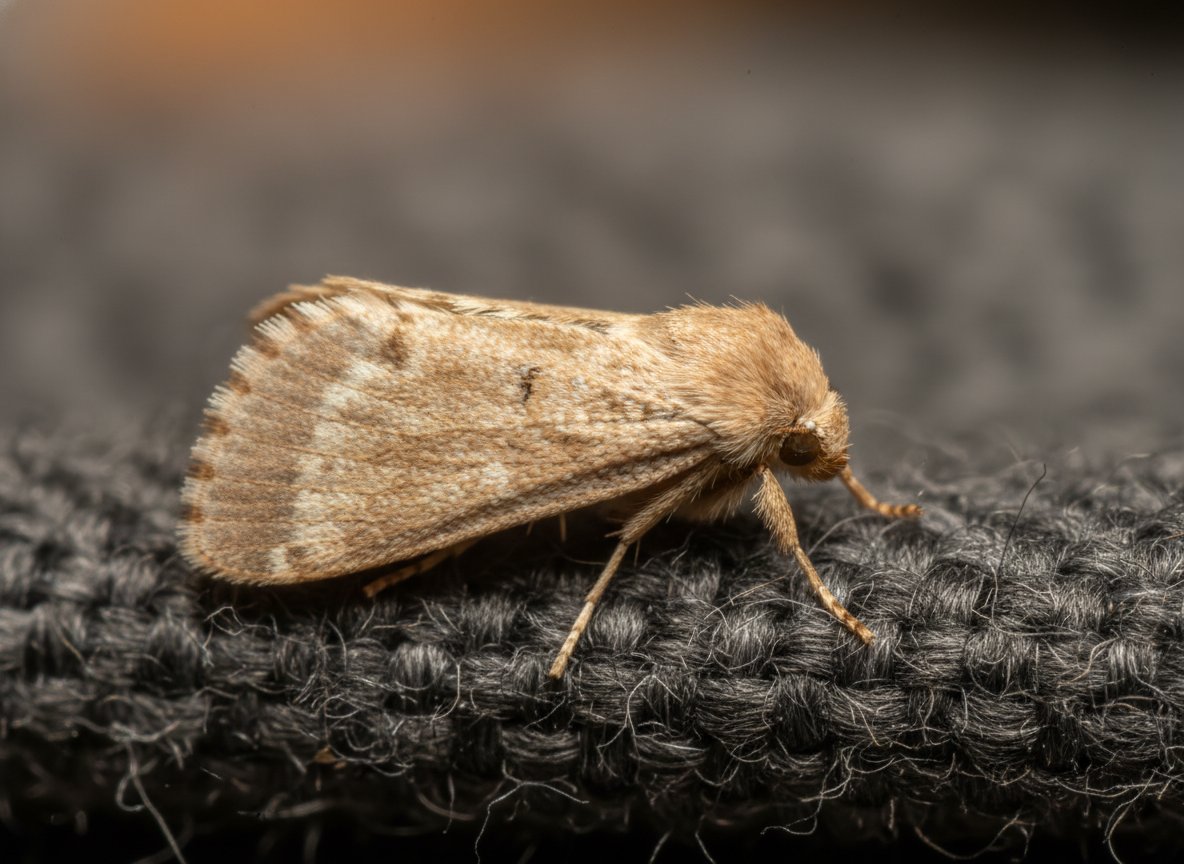
Clothes moths come in two main species. Webbing clothes moths (Tineola bisselliella) are small (6-7mm), uniformly golden-buff colored, and avoid light — they scuttle rather than fly and hide in dark closets and drawers. Casemaking clothes moths (Tinea pellionella) are similar but slightly darker with faint spots on the wings; their larvae construct portable silken cases around themselves. Both species' larvae feed on natural animal fibers — wool, cashmere, silk, fur, feathers, and leather. They are particularly attracted to items with food stains, perspiration, or body oils.
It is important to distinguish pest moths from harmless outdoor moths that wander inside, attracted to lights. Pantry moths and clothes moths are small (under 12mm), weak fliers, and are found near their food sources — not circling light fixtures. If you find large moths (over 25mm) fluttering around lights at night, these are typically harmless outdoor species that accidentally entered through open doors or windows and pose no threat to food or clothing. Gypsy moths (now called spongy moths, Lymantria dispar) are an outdoor pest that defoliates trees — they do not infest homes but can be a significant landscape concern in affected areas.
Signs of a Moths Infestation
For pantry moths, the most common first sign is seeing small moths fluttering weakly in the kitchen, especially near the pantry or food storage areas. Inspect stored food products for fine silken webbing on the food surface, particularly in corners of packages and around the top of containers. Look for small cream-colored larvae (caterpillars) crawling on food, package surfaces, walls, and ceilings — larvae leave the food source to pupate and may crawl surprising distances. Tiny cocoons (silken pupal cases) may be found in ceiling corners, behind shelving, or along wall-shelf junctions.
For clothes moths, look for irregular holes in wool, cashmere, silk, and other natural fiber garments. Damage often appears in hidden areas — under collars, along seams, in folds, and on the backs of garments hanging against walls. Check for silken tubes or cases (casemaking moth) or patches of webbing (webbing moth) on fabric surfaces. Larvae leave behind sandy, pellet-like frass (excrement) the same color as the fabric they have been eating. Inspect stored woolens, fur items, feather pillows, natural-fiber rugs, and taxidermy.
In both cases, pheromone traps (sticky traps baited with moth sex pheromones, available at hardware stores) are excellent diagnostic tools. Place pantry moth traps near food storage and clothes moth traps in closets. If traps catch moths within a few days, you have an active infestation. The number of moths caught helps gauge severity. Note that traps only catch male moths and are monitoring tools — they do not control the infestation on their own, as mated females may already be laying eggs.
Health & Property Risks
Pantry moths contaminate food supplies with larvae, webbing, and frass (droppings), rendering food unappetizing and unusable. While consuming moth-infested food is not known to cause illness (the larvae and webbing are not toxic), the contamination leads to economic losses from discarded groceries. Infestations can spread throughout an entire pantry or kitchen, as larvae can chew through thin packaging (paper, cardboard, and thin plastic) to reach new food sources. For businesses — grocery stores, restaurants, food manufacturers — moth infestations create regulatory, liability, and reputation problems.
Clothes moths can cause significant damage to valuable textiles. Wool suits, cashmere sweaters, silk garments, fur coats, antique rugs, tapestries, and taxidermy collections are all at risk. Because larvae feed in dark, undisturbed areas, damage is often extensive by the time it is discovered. A single clothes moth larva can consume enough fabric to create visible holes over its 2-3 month larval stage, and multiple larvae can destroy an item quickly. Vintage and irreplaceable items are particularly vulnerable, and damage to heirloom textiles, Oriental rugs, and designer garments can represent thousands of dollars in losses.
While moths do not pose direct health risks to humans (they do not bite or transmit diseases), the frustration and economic impact of repeated infestations is significant. Moth infestations can be persistent and recurrent if the source is not fully eliminated — a few missed eggs or larvae can restart the cycle. The psychological burden of repeatedly discovering damaged clothing or contaminated food drives many homeowners to seek professional help even though the pest itself is physically harmless.
DIY vs. Professional Treatment
Pantry moths are very manageable with thorough DIY effort. The process: (1) Remove everything from the pantry and inspect each item. Discard all open packages, anything with visible webbing or larvae, and any suspect products. (2) Vacuum shelves thoroughly, paying special attention to shelf pin holes, cracks, corners, and wall-shelf junctions where pupae hide. (3) Wipe shelves with hot soapy water or a vinegar solution. (4) Transfer all remaining dry goods to airtight glass or hard plastic containers. (5) Place pheromone traps to monitor for remaining activity. The infestation should resolve within 2-4 weeks if all sources are eliminated.
Clothes moths require more extensive effort. Launder or dry-clean all affected and potentially affected items — heat (above 120°F) kills all life stages. For items that cannot be washed, freeze them at 0°F for 72 hours. Thoroughly vacuum closets, drawers, and storage areas, including carpet edges, baseboards, and cracks. Dispose of the vacuum bag or empty the canister outside immediately. Store clean, moth-free woolens in airtight garment bags, sealed bins, or cedar chests. Cedar and lavender provide mild deterrence but do not kill active infestations — they are preventive, not curative.
Call a professional when: pantry moth infestations persist despite thorough cleanout (hidden sources may exist in wall voids, under appliances, or in adjacent rooms), clothes moths are damaging items throughout the home or in hard-to-treat areas (wall-to-wall carpet, inside wall voids behind baseboards), you have a valuable collection at risk (museum-quality textiles, fur collection, antique rugs), or you need commercial moth management for a food storage or textile business. Professionals can apply targeted residual insecticides to cracks and crevices, use IGR (insect growth regulator) treatments to disrupt the moth life cycle, and in severe cases, arrange for fumigation of affected areas or stored items.
Prevention Tips
Prevent pantry moths by storing all dry goods in airtight containers immediately after purchase — glass jars with rubber-sealed lids and hard plastic containers with snap-on lids are best. Never leave items in original cardboard or paper packaging in the pantry. Inspect all grain products, dried fruit, nuts, pet food, and birdseed before purchasing — check for holes in packaging. Consider freezing newly purchased flour, rice, and grain products for 72 hours before pantry storage to kill any eggs or larvae. Clean pantry shelves regularly and use older products first (first in, first out). Place pheromone traps as an early warning system.
Prevent clothes moths by cleaning all garments before seasonal storage — moths are attracted to food stains, perspiration, and body oils on fabric. Store off-season woolens, cashmere, silk, and fur in airtight garment bags, sealed plastic bins, or properly maintained cedar chests. Cedar is mildly repellent when fresh (sand the interior annually to refresh the oils) but does not kill moths already present. Add cedar blocks, lavender sachets, or moth-specific repellent products (not traditional naphthalene mothballs, which have health concerns) to storage containers as a supplemental deterrent.
Maintain general household cleanliness to reduce moth habitat. Vacuum regularly, especially in closets, under furniture, along carpet edges, and in corners where lint and pet hair accumulate (carpet beetle and clothes moth larvae feed in these areas). Rotate clothing and check stored items periodically — disturbing items and exposing them to light discourages moth activity. For valuable collections (rugs, tapestries, fur), consider professional cleaning and climate-controlled storage. Run pheromone traps year-round in closets and pantries as an early detection system — catching a single moth early is much easier to address than discovering a full-blown infestation months later.
Treatment Costs
Pantry moth treatment typically costs $100 to $300 for a professional inspection, identification of hidden sources, targeted treatment of pantry areas and wall voids, and monitoring. Most pantry moth problems can be resolved with DIY methods, so professional treatment is usually reserved for persistent infestations or commercial food storage facilities. Clothes moth treatment costs $200 to $500 for residential treatment, which includes inspection, identification, targeted insecticide application to closets, carpet edges, and storage areas, and IGR treatment to disrupt the breeding cycle.
For severe or widespread moth infestations, fumigation of specific areas or stored items costs $500 to $2,000 depending on the scope. Professional mothproofing services for valuable collections (rugs, furs, textiles) typically cost $100 to $300 for treatment and protective packaging. Commercial moth management for food storage or textile businesses runs $200 to $600 per month including regular monitoring, treatment, and compliance documentation.
See our full Moth Control Cost Guide for detailed pricing by species and service type.
Frequently Asked Questions
Do mothballs actually work for clothes moths?
Traditional naphthalene and paradichlorobenzene mothballs do kill moth larvae, but they have significant drawbacks: they are toxic to humans and pets, produce strong unpleasant odors, and are classified as possible carcinogens. They should only be used in sealed containers per label instructions, never scattered loosely in closets. Cedar blocks and lavender are safer alternatives for prevention, though they do not kill active infestations.
How do pantry moths get into sealed food packages?
Pantry moth larvae can chew through thin cardboard, paper, and even thin plastic packaging. They can also enter through tiny gaps in folded or crimped package closures. Infestations often start from products that were already infested at the store or warehouse. This is why transferring dry goods to airtight glass or hard plastic containers immediately after purchase is the most effective prevention.
Will cedar closets keep moths away?
Fresh cedar produces aromatic oils that can repel and even kill young clothes moth larvae at high concentrations. However, the effect diminishes as cedar ages and the oils evaporate. Cedar is best used as a supplemental deterrent in combination with proper cleaning, airtight storage, and monitoring — not as a standalone moth prevention method. Sand cedar surfaces annually to refresh the oils.
Get a Free Moths Treatment Quote
Answer a few questions about your pest problem and get an instant price estimate, then get matched with licensed professionals in your area.
Get a Free QuoteFind Moths Exterminators Near You
Browse our directory of licensed pest control professionals who specialize in moths treatment.
Search DirectoryRelated Pest Guides
Ants
Stop ant invasions with our expert guide. Learn to identify ant species, find the colony, use effective treatments, and prevent future problems.
Beetles
Complete guide to identifying and eliminating beetles in your home. Covers carpet beetles, pantry beetles, powderpost beetles, and Japanese beetles with treatment and prevention tips.