
How to Get Rid of Beetles: Carpet Beetles, Pantry Beetles & More
Coleoptera
How to Identify Beetles
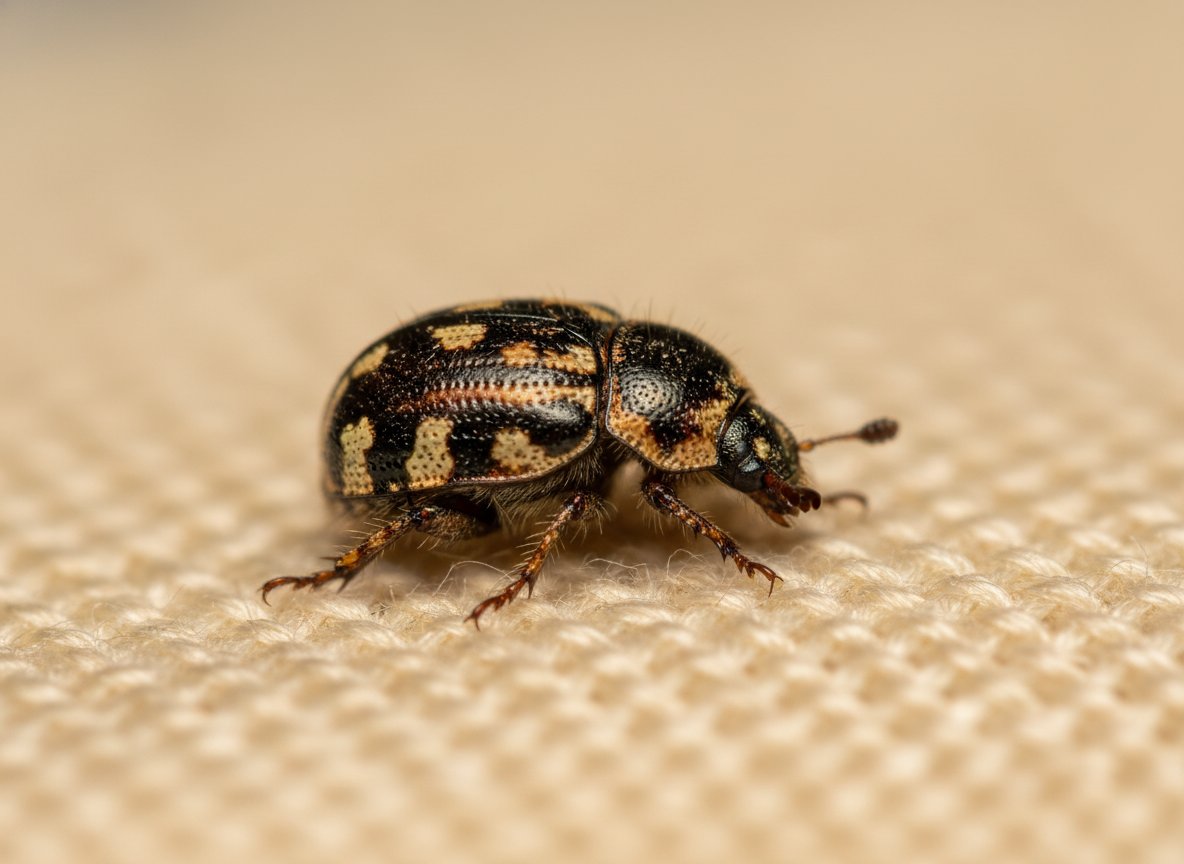
Beetles are the largest order of insects, and several species commonly infest homes. Carpet beetles (Anthrenus and Attagenus species) are small (2-5mm), oval-shaped, and come in varied and black varieties. Varied carpet beetles have irregular patches of white, brown, and yellow scales on their wing covers. Black carpet beetles are solid dark brown to black. Their larvae — small, fuzzy, caterpillar-like creatures — do the actual damage, feeding on natural fibers, wool, silk, leather, fur, and feathers.
Pantry beetles encompass several species that infest stored food products. Drugstore beetles and cigarette beetles are small (2-3mm), reddish-brown, and cylindrical. Sawtoothed grain beetles are flattened, brown, 2-3mm long, with six saw-like projections on each side of the thorax. Flour beetles (red and confused) are reddish-brown, 3-4mm, and commonly found in flour, cereal, and grain products. All pantry beetles infest dry goods including flour, cereal, spices, pet food, dried fruit, and birdseed.
Powderpost beetles (Lyctus, Anobiid, and Bostrichid families) are wood-destroying insects that bore into hardwoods and softwoods, leaving tiny round exit holes (1/32 to 1/8 inch) and fine powdery frass. They are second only to termites in wood damage to structures. Japanese beetles are larger (10-12mm), metallic green with copper wing covers, and primarily damage lawns and ornamental plants — their grubs feed on grass roots, causing brown patches, while adults skeletonize leaves of over 300 plant species. Identifying the specific beetle type is crucial because each has a completely different treatment approach.
Signs of a Beetles Infestation
For carpet beetles, the primary signs are damage to natural-fiber items: irregular holes in wool clothing, bare patches on rugs and carpets, damage to upholstered furniture, and deterioration of stored animal-based items like fur, silk, and taxidermy. You may find shed larval skins — tiny, hollow, fuzzy casings — in closets, along baseboards, and under furniture. Adult carpet beetles are often found on windowsills, as they are attracted to light and try to fly outdoors. Finding adults near windows in spring is a key diagnostic sign.
Pantry beetle infestations are usually discovered when you find small beetles, larvae, or webbing inside food packages. Check flour, cereal, rice, spices, dried pasta, pet food, birdseed, and dried fruit. You may notice tiny holes in packaging, fine powdery residue in food containers, or a stale, off-putting smell from infested products. Pantry beetles can chew through thin cardboard and plastic packaging, so even sealed boxes may be compromised.
Powderpost beetles leave distinctive evidence: tiny round exit holes in wood surfaces (appearing in spring/summer when adults emerge) and fine, flour-like powder (frass) sifting out of these holes or accumulating below infested wood. Fresh frass is light-colored; old frass darkens over time. Infested wood eventually becomes riddled with tunnels and can collapse under pressure. Check hardwood floors, furniture, structural timbers, and stored lumber. Japanese beetle damage shows as skeletonized leaves (only veins remaining) on roses, grapes, lindens, and other ornamentals, and brown patches in lawns from grub feeding on roots.
Health & Property Risks
Carpet beetles can cause significant damage to valuable items including wool rugs, cashmere clothing, silk garments, fur coats, feather pillows, and museum collections. Damage is often discovered only after larvae have been feeding for weeks or months in dark, undisturbed areas. Carpet beetle larvae can also trigger allergic reactions — their tiny hairs (setae) can cause itchy welts and respiratory irritation in sensitive individuals, sometimes mistaken for bed bug bites.
Pantry beetles contaminate food supplies, leading to economic losses from discarded groceries. While consuming beetle-infested food is generally not harmful (the insects are not toxic), it is unpleasant and the contamination renders food unsaleable for businesses. In commercial food storage and processing, beetle infestations can result in regulatory violations, product recalls, and significant financial losses. Infestations can persist and spread through an entire pantry if the source is not identified and eliminated.
Powderpost beetles are the second most destructive wood pest after termites. They can cause serious structural damage to hardwood floors, furniture, cabinetry, and structural timbers over multiple generations. Because their life cycle spans 1-5 years (larvae feed inside wood for most of that time), damage is often extensive by the time exit holes are noticed. Japanese beetle grubs damage lawns by destroying grass root systems, and adults defoliate ornamental plants, reducing property aesthetics and plant health. In severe cases, grub-damaged lawns require complete renovation.
DIY vs. Professional Treatment
Many beetle problems can be managed with DIY methods if caught early. For carpet beetles: thoroughly vacuum all carpets, rugs, closets, and upholstered furniture, paying special attention to edges, under furniture, and inside closets. Wash or dry-clean all natural-fiber clothing and textiles. Launder items on high heat when possible — temperatures above 120°F kill all life stages. Store susceptible items in airtight containers or garment bags. Insecticide sprays containing bifenthrin or deltamethrin can be applied to carpet edges, closet floors, and baseboards where larvae feed.
For pantry beetles: discard all infested food products and any opened packages in the affected area. Remove all items from pantry shelves, vacuum shelves thoroughly (paying attention to cracks and shelf pin holes), and wipe down with vinegar or mild soap. Store all dry goods in airtight glass or hard plastic containers going forward. Pantry beetle traps (pheromone-based) can monitor for remaining activity. For Japanese beetles: hand-pick adults from plants into soapy water, apply milky spore or beneficial nematodes to lawns in late summer to target grubs, and use neem oil or carbaryl on ornamental plants.
Call a professional when: you have powderpost beetles (wood damage requires professional assessment and may need fumigation or borate treatment), carpet beetle infestations are widespread or recurring despite cleaning efforts, pantry beetles persist after thorough cleanout (hidden sources may exist in wall voids or inaccessible areas), or Japanese beetle grub damage covers large lawn areas. For powderpost beetles, professionals can determine whether the infestation is active (fresh frass, new exit holes) or old, and recommend targeted treatments including borate wood treatments, localized fumigation, or in severe cases, whole-structure fumigation.
Prevention Tips
Prevent carpet beetles by regularly vacuuming, especially in closets, under furniture, and along carpet edges where pet hair and lint accumulate. Store off-season wool, silk, and fur clothing in sealed garment bags or airtight bins with cedar blocks or mothballs (use mothballs only in sealed containers per label instructions). Clean clothing before storing — carpet beetle larvae are attracted to food stains and body oils on fabrics. Inspect cut flowers before bringing them inside, as adult carpet beetles feed on pollen and can hitch a ride into your home.
Prevent pantry beetles by storing all dry goods in airtight containers immediately after purchase — do not leave items in original cardboard or paper packaging. Inspect grocery items before purchasing (check for small holes or damaged packaging). Use older products first (first in, first out). Clean pantry shelves regularly. Avoid buying in excessive bulk unless you can store everything in sealed containers. Freeze suspect items (flour, grain, birdseed) for 72 hours after purchase to kill any eggs or larvae that may already be present.
Prevent powderpost beetles by using kiln-dried lumber for construction and woodworking projects, as kiln drying kills beetle larvae and eggs. Apply a borate-based wood preservative (such as Bora-Care) to unfinished wood surfaces in crawl spaces and attics. Finish wood surfaces with paint, varnish, or polyurethane — adult beetles cannot lay eggs in sealed wood. Inspect antique furniture and reclaimed wood carefully before bringing it into your home. For Japanese beetles, maintain a healthy lawn with proper watering and mowing height, apply preventive grub treatments in late spring (imidacloprid or chlorantraniliprole), and avoid Japanese beetle traps near gardens (they attract more beetles than they catch).
Treatment Costs
Beetle treatment costs vary widely by species. Carpet beetle treatment costs $100 to $350 for a standard residential treatment, which includes inspection, targeted insecticide application to infested areas, and recommendations for preventing recurrence. Severe or whole-home infestations may cost $300 to $600. Pantry beetle treatment costs $100 to $300, primarily covering inspection, identification of hidden sources, and treatment of shelving and wall voids.
Powderpost beetle treatment is the most expensive due to the structural nature of the damage. Localized borate treatment costs $200 to $800 per area. Whole-structure fumigation for severe powderpost beetle infestations costs $2,000 to $8,000 depending on home size. Professional wood damage assessment (determining if treatment is needed or if the infestation is inactive) costs $100 to $250 for the inspection. Japanese beetle lawn grub treatment costs $100 to $300 for a standard lawn, while combined lawn and ornamental treatment runs $200 to $500.
See our full Beetle Control Cost Guide for detailed pricing by species.
Frequently Asked Questions
Are carpet beetle bites real?
Carpet beetles do not actually bite. However, their larvae have tiny barbed hairs (setae) that can cause itchy, red welts and rashes on skin, which are frequently mistaken for bed bug or flea bites. If you are getting 'bitten' but cannot find bed bugs, carpet beetle larvae are a common alternative explanation.
How do I know if my pantry beetles are gone?
After discarding infested food and cleaning thoroughly, place pheromone-based pantry beetle traps on shelves to monitor for remaining activity. If traps remain empty for 4-6 weeks, the infestation is likely resolved. Continue storing all dry goods in airtight containers to prevent reintroduction.
Can powderpost beetles destroy my house like termites?
Powderpost beetles can cause serious structural damage, but they typically work much more slowly than termites. Damage accumulates over years as successive generations re-infest the same wood. However, if left untreated over many years, powderpost beetles can significantly weaken hardwood floors, furniture, and structural elements. Professional treatment is recommended for active infestations.
Get a Free Beetles Treatment Quote
Answer a few questions about your pest problem and get an instant price estimate, then get matched with licensed professionals in your area.
Get a Free QuoteFind Beetles Exterminators Near You
Browse our directory of licensed pest control professionals who specialize in beetles treatment.
Search DirectoryRelated Pest Guides
Ants
Stop ant invasions with our expert guide. Learn to identify ant species, find the colony, use effective treatments, and prevent future problems.
Cockroaches
Eliminate cockroaches for good. Expert guide covers identification, health risks, proven treatment methods, and prevention tips for your home.