
How to Get Rid of Flies: House Flies, Drain Flies, Fruit Flies & More
Diptera
How to Identify Flies
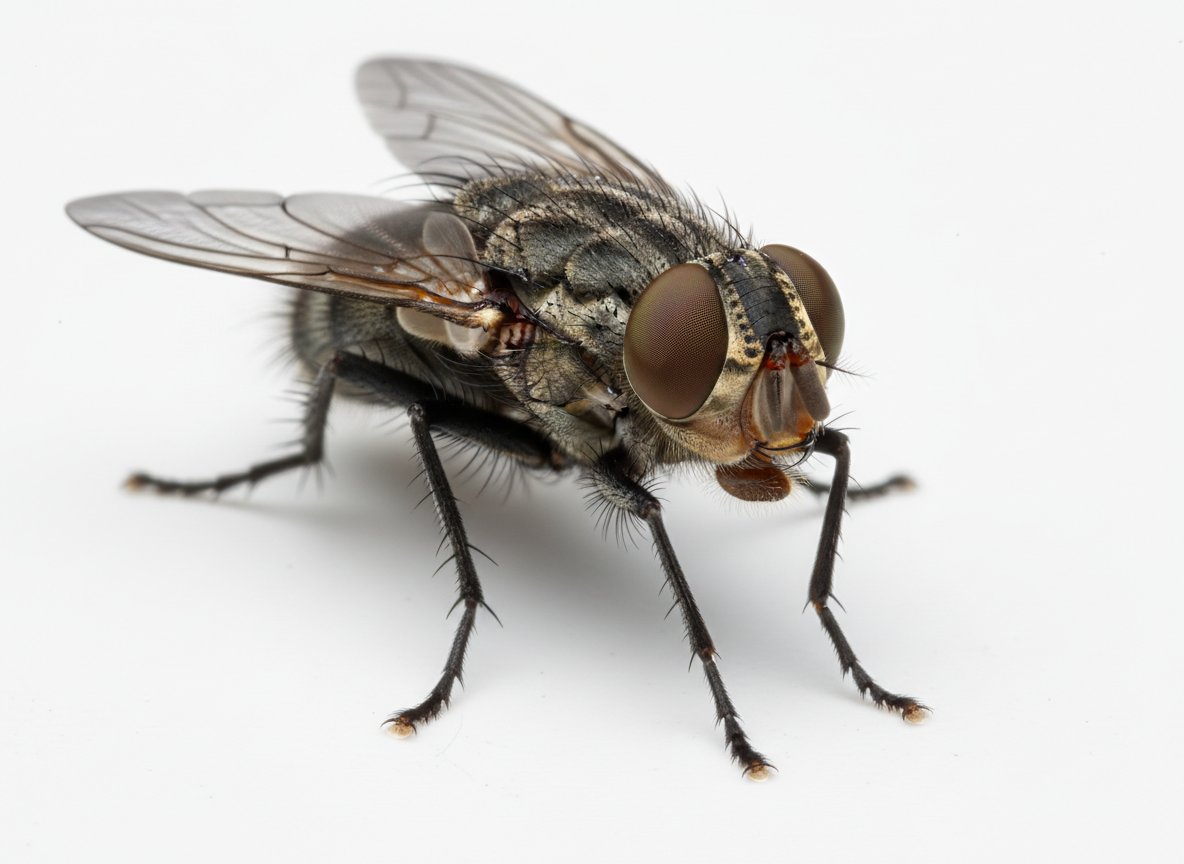
Several fly species commonly infest homes, each with different habits and breeding sources. House flies (Musca domestica) are the most common, measuring 6-7mm with gray bodies, four dark stripes on the thorax, and large reddish compound eyes. They are strong fliers and are attracted to food, garbage, and animal waste. Fruit flies (Drosophila species) are tiny (2-4mm), tan or brown with distinctive red eyes, and congregate around ripening fruit, fermenting liquids, and moist organic matter.
Drain flies (moth flies, Psychodidae) are small (2-5mm), fuzzy, moth-like flies with broad leaf-shaped wings held roof-like over the body. They breed in the organic film that lines drain pipes, and are typically found near sinks, showers, and floor drains. Cluster flies (Pollenia rudis) are slightly larger than house flies, darker, and slower-moving. They invade homes in fall to overwinter in wall voids and attics, emerging sluggishly on warm winter days. They do not breed indoors.
Blow flies (bottle flies) are metallic green, blue, or copper-colored, slightly larger than house flies, and are attracted to decaying meat, garbage, and dead animals. A sudden appearance of blow flies indoors often indicates a dead animal (rodent, bird) in a wall void or attic. Fungus gnats are tiny (2-3mm), dark-bodied flies found around overwatered houseplants — their larvae feed on fungus and organic matter in soil. Identifying the correct fly species is essential because each type has a different breeding source that must be eliminated for effective control.
Signs of a Flies Infestation
The most obvious sign is seeing flies — but where and when you see them reveals the species and source. House flies buzzing around the kitchen near garbage, pet bowls, or food prep areas indicate sanitation issues. Fruit flies hovering near the fruit bowl, recycling bin, or kitchen sink suggest fermenting organic material nearby. If flies appear near bathroom or basement drains, especially slow-moving fuzzy flies resting on walls near the drain, you likely have drain flies breeding in the pipe biofilm.
A sudden appearance of large metallic flies (blow flies) indoors, particularly in one area of the house, strongly suggests a dead animal in a wall void, attic, or crawl space. Cluster flies appearing in large numbers on sunny windows during winter indicate overwintering colonies in the walls or attic. Tiny dark flies hovering around houseplants point to fungus gnats breeding in moist potting soil.
Other signs include fly specks (tiny dark dots of fecal matter) on walls, ceilings, light fixtures, and windows. Heavy fly activity near dumpsters, compost bins, or pet waste areas outdoors suggests breeding populations that will inevitably move indoors. Maggots (fly larvae) found in garbage cans, around pet areas, or in neglected drain pipes confirm active breeding. For commercial kitchens and food service, even a few flies are a red flag indicating potential health code violations and sanitation issues that need immediate attention.
Health & Property Risks
Flies are significant disease vectors. House flies alone can carry over 100 different pathogens, including bacteria that cause food poisoning (Salmonella, E. coli), dysentery, cholera, typhoid, and eye infections. Flies feed by landing on food, regurgitating digestive fluids, and then consuming the liquefied food — each time they land on your food, they potentially deposit pathogens picked up from their last landing on garbage, animal waste, or decaying matter. The World Health Organization identifies flies as major contributors to foodborne illness worldwide.
In addition to bacteria, flies transmit parasitic worms and other organisms. Blow flies can cause myiasis (maggot infestation of wounds) in rare cases, particularly in pets or incapacitated individuals. Fruit flies can contaminate food with bacteria and contribute to food spoilage. Drain flies, while not direct disease vectors, indicate unsanitary drain conditions that can harbor harmful bacteria.
For businesses, fly infestations have serious consequences beyond health risks. Food service establishments can face health department violations, fines, forced closures, and devastating online reviews. Commercial fly problems indicate systemic sanitation failures that need professional assessment. Even in residential settings, persistent fly problems affect quality of life and can indicate underlying issues (poor drainage, dead animals in walls, plumbing problems) that need addressing beyond just killing the flies.
DIY vs. Professional Treatment
Flies are one of the more DIY-friendly pests because the key to elimination is identifying and removing the breeding source — no specialized chemicals needed. For fruit flies: remove overripe fruit, clean drains, empty and clean recycling bins, and set apple cider vinegar traps (a jar with vinegar and a drop of dish soap, covered with plastic wrap poked with small holes). For drain flies: clean the organic buildup inside drains using a stiff brush and enzyme-based drain cleaner — bleach kills adults but does not remove the biofilm they breed in.
For house flies: improve sanitation — clean garbage cans, remove pet waste promptly, keep food covered, and ensure window screens are intact. Fly traps, sticky ribbons, and UV light traps reduce adult populations while you address the source. For cluster flies: seal exterior cracks and gaps in late summer before they enter to overwinter; once they are inside walls, options are limited to vacuuming them as they emerge. For fungus gnats: let houseplant soil dry out between waterings and apply a layer of sand on top of the soil to prevent egg-laying.
Call a professional when: you cannot identify the species or locate the breeding source, fly problems persist despite thorough sanitation efforts, you suspect a dead animal in a wall or attic (blow fly source), you need commercial fly management for a food service business (requires ongoing monitoring and documentation), or the infestation is severe with flies in multiple areas. Professional pest control for flies typically involves sanitation assessment, identification of breeding sources, targeted treatments (residual sprays, bait stations, IGRs), and installation of commercial fly control devices like UV light traps.
Prevention Tips
Sanitation is the foundation of fly prevention. Keep garbage cans clean and tightly sealed — wash bins monthly with hot soapy water. Store food in sealed containers and refrigerate produce promptly. Clean up pet waste daily. Wipe down counters and sweep floors after food preparation. Empty and rinse recycling bins weekly, particularly containers that held sugary or fermented beverages. Fix leaky plumbing and clean drain traps monthly — pour boiling water or enzyme drain cleaner through drains to prevent biofilm buildup that attracts drain flies.
Exclude flies from your home with properly fitted window and door screens (standard mesh is 18x16 per inch). Repair any torn or ill-fitting screens. Install door sweeps and keep doors closed, especially during peak fly season. For homes with frequent door traffic, consider a screen door or air curtain. Seal gaps around windows, doors, and utility penetrations. For cluster fly prevention specifically, caulk and seal all exterior cracks and gaps in late summer (August-September), focusing on the south and west facing walls where these flies concentrate.
Manage outdoor breeding sources to reduce fly pressure on your home. Keep compost bins sealed and turn compost regularly. Store outdoor garbage in cans with tight-fitting lids, positioned away from doors and windows. Clean up fallen fruit from trees promptly. If you have livestock or pets, manage waste on a daily basis. Consider planting fly-repellent herbs like basil, lavender, and mint near doorways and outdoor seating areas. For ongoing protection, residual perimeter sprays around doors, windows, and eaves can reduce the number of flies that enter — reapply every 4-6 weeks during the active season.
Treatment Costs
Professional fly control costs depend heavily on the type of service and setting. For residential fly problems, a one-time treatment costs $100 to $300, which typically includes inspection, identification of breeding sources, treatment of affected areas, and recommendations for sanitation improvements. Recurring residential fly service (monthly or quarterly) runs $75 to $150 per visit and is worthwhile for homes with persistent issues or properties near farms, dumpsters, or other fly-attracting sites.
For commercial fly management (restaurants, food processing, healthcare), costs are higher due to regulatory requirements, monitoring equipment, and documentation. Commercial fly control programs typically cost $200 to $600 per month depending on the size of the facility. This usually includes installation and maintenance of UV fly traps, exterior bait stations, regular monitoring visits, and compliance documentation. Individual UV light trap units cost $150-$400 each for purchase and installation.
See our full Fly Control Cost Guide for detailed pricing by service type.
Frequently Asked Questions
Why do I suddenly have so many flies in my house?
A sudden fly appearance usually means a new breeding source has appeared nearby. For house flies, check for uncovered garbage, pet waste, or a door/window left open. A burst of large metallic green or blue flies strongly suggests a dead animal in a wall, attic, or crawl space. Fruit flies indicate fermenting produce or spills. Identifying the type of fly points directly to the source.
How do I get rid of drain flies?
Drain flies breed in the organic biofilm lining your drain pipes. To eliminate them, scrub inside the drain with a stiff brush to physically remove the film, then treat with an enzyme-based drain cleaner (not bleach — it kills adults but does not remove the biofilm). Repeat for several days. Keep drains flowing and clean them monthly to prevent recurrence.
Are flies dangerous to my health?
Yes. House flies can carry over 100 pathogens including Salmonella, E. coli, and other bacteria that cause food poisoning and illness. Every time a fly lands on your food, it potentially deposits bacteria from its previous landing on garbage or animal waste. While a single fly is unlikely to make you sick, persistent fly problems represent a real food safety risk.
Get a Free Flies Treatment Quote
Answer a few questions about your pest problem and get an instant price estimate, then get matched with licensed professionals in your area.
Get a Free QuoteFind Flies Exterminators Near You
Browse our directory of licensed pest control professionals who specialize in flies treatment.
Search DirectoryRelated Pest Guides
Ants
Stop ant invasions with our expert guide. Learn to identify ant species, find the colony, use effective treatments, and prevent future problems.
Mosquitoes
Reduce mosquitoes around your home with proven strategies. Learn about breeding prevention, yard treatments, repellents, and professional services.