
How to Get Rid of Fleas: Home & Pet Treatment Guide
Siphonaptera
How to Identify Fleas
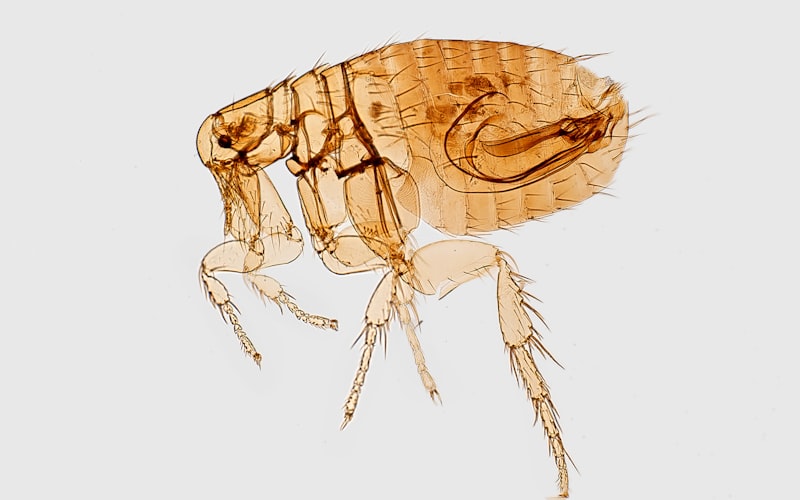
Fleas are tiny (1/16 to 1/8 inch), wingless, dark reddish-brown insects with laterally compressed bodies designed for moving through fur and hair. They have powerful hind legs that allow them to jump up to 150 times their own body length. Under magnification, their bodies appear shiny and covered in backward-pointing spines and bristles.
The cat flea (Ctenocephalides felis) is the most common species found on pets and in homes, despite its name affecting both cats and dogs. Dog fleas, human fleas, and rat fleas are less common but do occur. All species look similar without magnification and are treated the same way in homes.
Flea eggs are tiny (0.5mm), white, oval, and smooth - they easily fall off pets into carpeting, bedding, and furniture. Flea larvae are small (2-5mm), translucent, worm-like, and avoid light by burrowing deep into carpet fibers. Flea pupae spin sticky cocoons that are nearly impossible to remove and can remain dormant for months. Understanding this life cycle is crucial: adult fleas you see represent only about 5% of the total flea population in your home.
Signs of a Fleas Infestation
The first sign is often your pets scratching excessively, biting at their fur, or showing signs of skin irritation. Check your pet's fur, especially around the neck, belly, and base of the tail. You may see adult fleas moving through the fur, or you may find "flea dirt" - tiny black specks that are actually flea droppings (digested blood). Place some specks on a wet white paper towel; if they dissolve into reddish-brown smears, that confirms flea dirt.
People often notice bites on their ankles and lower legs. Flea bites on humans are small, red, intensely itchy welts, often in clusters or lines. They are typically concentrated on the lower extremities because fleas jump from carpeting and floors.
To confirm a flea infestation, try the "white sock test": walk through carpeted areas wearing white socks, then examine the socks for tiny dark fleas. You can also set out a shallow dish of soapy water under a night light - fleas are attracted to the light and warmth and will jump into the water. Finding any fleas with these methods confirms an active infestation requiring treatment.
Health & Property Risks
Flea bites cause itching and discomfort for both humans and pets. Some individuals and animals develop flea allergy dermatitis (FAD), an allergic reaction to flea saliva that causes severe itching, hair loss in pets, and skin infections from excessive scratching. FAD is one of the most common skin conditions in dogs and cats.
Fleas can transmit diseases and parasites. They are the primary vector for murine typhus (transmitted through flea feces) and historically were responsible for spreading bubonic plague. Cat fleas can transmit Bartonella (cat scratch disease) and the double-pored tapeworm to pets and occasionally humans who accidentally ingest a flea.
In severe infestations, young, elderly, or small animals can develop anemia from blood loss. Flea infestations also cause significant stress and sleep disruption for household members. The financial cost of treating pets, the home, and potentially the yard, combined with the difficulty of complete elimination, makes prevention far preferable to treatment.
DIY vs. Professional Treatment
Flea control requires a simultaneous three-pronged approach: treat pets, treat the home, and treat the yard. Skipping any one area allows the infestation to rebound. For pets: use veterinarian-recommended flea treatments (oral medications like NexGard or Comfortis, or topical treatments like Frontline). Over-the-counter flea collars and sprays are generally less effective. Consult your vet for the best option for your pet.
For the home: vacuum thoroughly every day for at least two weeks, focusing on carpeted areas, under furniture, and along baseboards. Immediately empty the vacuum outside. Wash all pet bedding and linens in hot water. Apply an indoor flea treatment containing an insect growth regulator (IGR) to carpets and upholstered furniture. The IGR prevents eggs and larvae from developing into adults.
Call a professional when: DIY treatments have not eliminated the problem after 2-3 weeks, the infestation is severe, you have a large or multi-story home, or the problem keeps recurring. Professionals use commercial-grade products and application methods (including ULV foggers and targeted residual sprays) that penetrate deep into carpet fibers where flea larvae hide. They also treat yards to eliminate the outdoor reservoir of fleas. Expect to need 2-3 treatments spaced 2 weeks apart to break the flea life cycle.
Prevention Tips
Keep all pets on year-round flea prevention medication, even indoor-only pets (fleas can be brought in on clothing or by other animals). This is the single most effective prevention step. Consult your veterinarian for the most appropriate product for your pets. Regular grooming and flea combing help catch problems early.
Vacuum frequently, especially in areas where pets spend time. Regular vacuuming removes flea eggs and larvae before they develop into biting adults. Wash pet bedding weekly in hot water. Keep your yard mowed short and clear of leaf debris and brush, which creates humid, shaded habitat that fleas thrive in.
If you adopt or acquire a new pet, have it checked and treated for fleas before bringing it into your home. When visiting homes with pets or walking in wooded/grassy areas, inspect yourself and your clothing before entering your home. Treat your yard with beneficial nematodes (natural flea predators) or appropriate outdoor flea treatments if your area has high flea pressure.
Treatment Costs
Professional flea treatment for a home typically costs $150-$400 for an initial treatment, with follow-up treatments (usually needed) at $100-$250 each. A complete treatment program (2-3 visits) averages $300-$600. Yard treatment adds $100-$300 per application depending on yard size.
Pet treatment costs vary: veterinary flea medications run $15-$50 per month per pet, while professional flea baths or dips cost $30-$75 per pet. Factors affecting home treatment cost include square footage, severity of infestation, number of treatments needed, and whether outdoor treatment is included. Many pest control companies offer package deals that include home and yard treatment with guaranteed retreatment if fleas persist.
See our full Flea Treatment Cost Guide for detailed pricing by method.
Frequently Asked Questions
Can fleas live in a house without pets?
Yes. Fleas can be brought in by visiting animals, wildlife (like raccoons or feral cats) living under the home, or even on human clothing. Flea pupae can also remain dormant in carpeting for months, hatching when they detect vibrations and warmth from new occupants.
Why am I still seeing fleas after treatment?
This is normal. Flea pupae in cocoons are resistant to all treatments and will continue hatching for 2-4 weeks (sometimes longer). Regular vacuuming stimulates hatching so emerging adults contact treated surfaces. The full flea life cycle must be broken, which takes 2-6 weeks of consistent treatment.
Can flea bombs (foggers) solve a flea problem?
Flea bombs have limited effectiveness. They do not penetrate deep into carpet fibers where larvae live, they leave residue on surfaces, and they cannot reach under furniture and in closets. Targeted professional treatments and IGR-based products are much more effective than foggers.
Get a Free Fleas Treatment Quote
Answer a few questions about your pest problem and get an instant price estimate, then get matched with licensed professionals in your area.
Get a Free QuoteFind Fleas Exterminators Near You
Browse our directory of licensed pest control professionals who specialize in fleas treatment.
Search Directory