
The Homeowner's Guide to Wasps, Hornets, and Yellow Jackets
- Spring is the ideal time to prevent wasp nests — queens are just starting to build, and early nests are small enough to remove safely.
- Yellow jackets are the most aggressive stinging insect homeowners encounter. They nest underground and in wall voids, and colonies can contain 5,000+ workers by late summer.
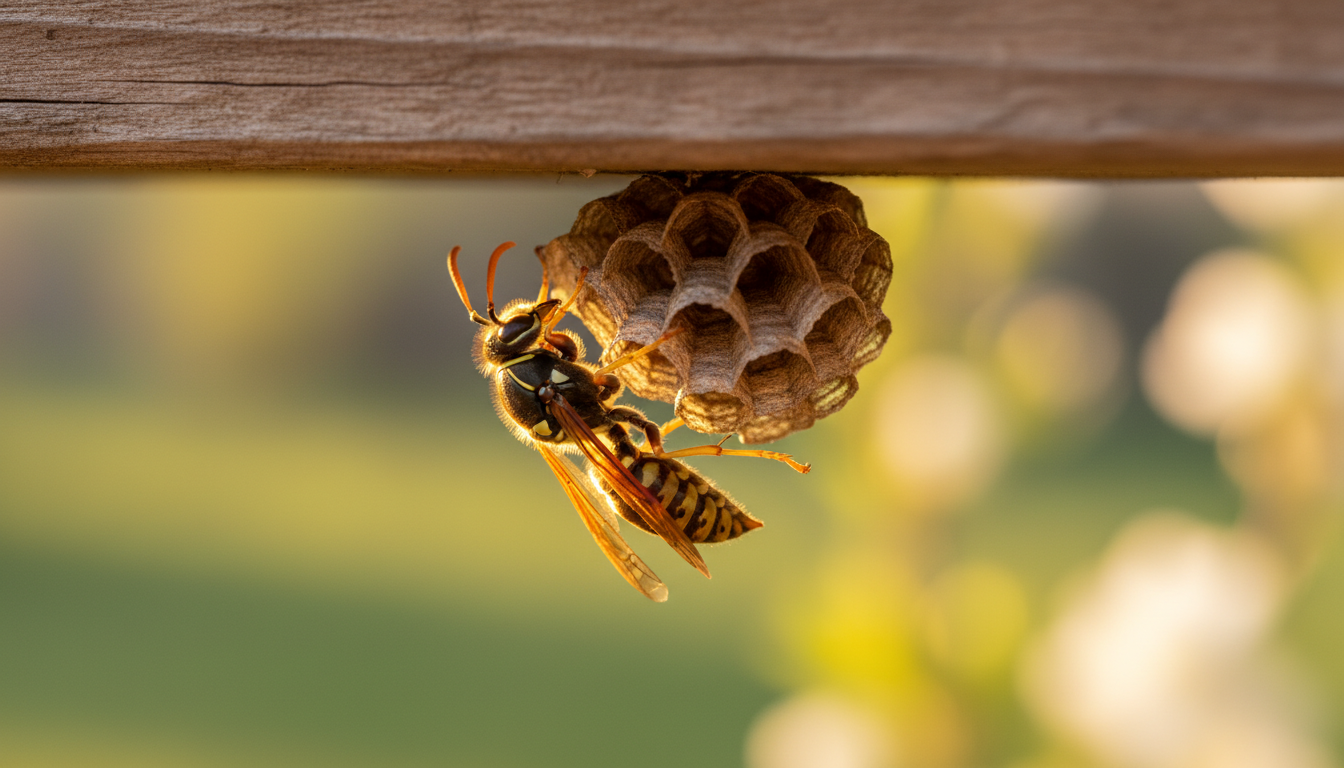
- Paper wasps are generally docile unless their nest is disturbed. Their open, umbrella-shaped nests are often found under eaves, porch ceilings, and deck railings.
- Bald-faced hornets build large, enclosed paper nests in trees and on structures. Do not attempt DIY removal — they are extremely aggressive when threatened.
- Roughly 62 people die annually in the U.S. from stinging insect reactions (CDC), making professional removal important for anyone with known allergies.
As temperatures climb in spring, wasp queens that survived winter emerge from hiding and begin building nests. For homeowners, the window between March and May is critical: catching a nest early when it contains just the queen and a few cells is far easier and safer than dealing with a fully established colony of thousands in July or August.
This guide covers how to identify the three most common stinging insects homeowners encounter, when DIY removal is reasonable, when to call a professional, and how to prevent nests from forming in the first place.
Identifying What You Are Dealing With
Correct identification matters because each species has different behavior, nesting habits, and aggression levels. Treating a yellow jacket nest the same way you would treat a paper wasp nest can result in a dangerous situation.
Paper Wasps
Appearance: Slender, 3/4 to 1 inch long, with long legs that dangle during flight. Brownish with yellow or reddish markings depending on the species.
Nest: Open, umbrella-shaped paper comb attached by a single stalk. Usually small (3–6 inches in diameter) with visible hexagonal cells. Found under eaves, porch roofs, deck railings, window frames, and inside open structures like mailboxes and grills.
Behavior: Relatively docile. They will not sting unless you directly threaten or touch their nest. Paper wasps are actually beneficial predators that eat caterpillars, flies, and other garden pests.
Risk level: Low to moderate. Safe to remove small early-season nests yourself.
Yellow Jackets
Appearance: Stocky, about 1/2 inch long, with bright yellow and black banding. They fly quickly in a side-to-side pattern and do not dangle their legs.
Nest: Enclosed paper nest, often built underground (in old rodent burrows, under landscape timber, in retaining walls) or inside wall voids, attics, and soffits. The entrance is a small hole — the nest itself is hidden. By late summer, a colony can contain 5,000+ workers.
Behavior: Highly aggressive, especially in late summer when colonies peak and food becomes scarce. They are attracted to human food (meat, fruit, sugary drinks) and will sting repeatedly when agitated. Unlike bees, yellow jackets do not lose their stinger.
Risk level: High. Professional removal recommended for all but the smallest, most accessible nests.
Bald-Faced Hornets
Appearance: Large (3/4 inch), black with white/ivory markings on the face and body. Technically a type of yellow jacket despite the "hornet" name.
Nest: Large, enclosed, teardrop-shaped gray paper nests, often suspended from tree branches, under eaves, or on the sides of buildings. Mature nests can be the size of a basketball or larger.
Behavior: Extremely aggressive when the nest is disturbed. They can sting through thin clothing, will pursue threats for significant distances, and can mobilize the entire colony in defense. They also spray venom into the eyes of perceived threats.
Risk level: Very high. Always hire a professional for bald-faced hornet removal.
When DIY Removal Is Safe
You can reasonably handle wasp nest removal yourself if all of the following are true:
- The nest is a paper wasp nest (open, visible comb)
- The nest is small (fewer than 20 cells, roughly the size of a golf ball to a tennis ball)
- The nest is accessible without a ladder or reaching overhead
- Nobody in your household has a known allergy to stinging insects
- You can approach from a safe retreat path (not on a ladder, not in a confined space)
How to Remove a Small Paper Wasp Nest
- Time it right. Treat at dusk or dawn when wasps are least active and all are on the nest.
- Wear protection. Long sleeves, pants, closed-toe shoes, gloves. Tuck pants into socks.
- Use a wasp-specific aerosol spray with a range of 15–20 feet. Stand as far back as the spray allows.
- Saturate the nest with a steady stream for 10–15 seconds. Coat the entire comb.
- Leave the area immediately. Wait 24 hours before approaching the nest.
- Remove the nest the next day. Knock it down with a stick and dispose of it in a sealed bag. If you see any live wasps, retreat and re-treat.
When to Call a Professional
Professional wasp and hornet removal typically costs $100–$400 depending on the species, nest location, and accessibility. Call a pro if:
- The nest is a yellow jacket ground nest, wall void nest, or a bald-faced hornet nest
- The nest is larger than a tennis ball or has been established for more than a few weeks
- The nest is in a location you cannot safely reach (roofline, inside soffits, underground)
- Anyone in the household has a stinging insect allergy
- You have already attempted treatment and the wasps are still active
Licensed pest control professionals use specialized equipment (telescoping poles, dust applicators for wall voids, protective suits) and commercial-grade products that homeowners cannot purchase.
Preventing Nests Before They Start
The best time to prevent wasp nests is early spring — before queens finish selecting and building nest sites. Here is what to do in March and April:
Inspection and Exclusion
- Walk your property and look under eaves, porch ceilings, deck railings, playground equipment, sheds, and gazebos for early-stage nests (golf ball–sized or smaller with just a few cells).
- Seal entry points into your home: gaps in siding, uncapped soffits, holes in fascia boards, and open vents without screens. Yellow jackets in particular exploit small openings to build inside wall voids.
- Screen attic vents and weep holes with fine mesh (1/8 inch) to prevent access without blocking airflow.
- Cap open pipes and fence posts. Hollow tubes are attractive nest sites for paper wasps.
Deterrence
- Hang fake nests (wasp decoys) under eaves and porch roofs. Paper wasps are territorial and avoid building near existing colonies. Research on effectiveness is mixed, but decoys are inexpensive and low-risk.
- Remove food attractants: keep outdoor garbage cans sealed with tight-fitting lids, clean up fallen fruit, and avoid leaving pet food outside.
- Treat problem areas with residual insecticide spray (labeled for outdoor use) under eaves and around known nesting spots. This creates a deterrent barrier that lasts several weeks.
What to Do If You Get Stung
For most people, a wasp sting causes temporary pain, redness, and localized swelling that resolves within a few hours. Basic first aid:
- Move away from the nest area to prevent additional stings
- Wash the sting site with soap and water
- Apply ice wrapped in a cloth for 10–15 minutes to reduce swelling
- Take an over-the-counter antihistamine (Benadryl) and pain reliever (ibuprofen) as needed
Seek emergency medical attention (call 911) immediately if you experience: difficulty breathing, swelling of the throat or tongue, dizziness or lightheadedness, rapid pulse, hives or rash spreading beyond the sting site, or nausea/vomiting. These are signs of anaphylaxis, a life-threatening allergic reaction that requires immediate epinephrine treatment.
If you have a known allergy, always carry an EpiPen during outdoor activities, especially in late summer when yellow jacket activity peaks.
Need a wasp or hornet nest removed? Get free quotes from licensed pest control professionals on PestControlBoard. Do not risk a DIY approach on dangerous nests — local experts can handle it safely.
Frequently Asked Questions
Should I kill wasps or leave them alone?
If the nest is away from high-traffic areas and not posing a risk to your family, consider leaving it. Paper wasps in particular are beneficial predators that eat significant numbers of garden pests. A nest under a far eave or in a shed corner that nobody uses may not need treatment. However, nests near doorways, play areas, pools, or outdoor dining areas should be addressed.
Do wasps come back to the same spot every year?
Not exactly — old colonies die off each winter (only newly mated queens survive), and queens do not reuse old nests. However, if a location has favorable conditions (shelter from wind and rain, proximity to food sources), new queens will often choose the same general area. Removing old nests and treating the area with residual spray reduces the likelihood of re-nesting.
What is the difference between a wasp and a bee?
Bees are generally fuzzy, rounder, and are pollen collectors that visit flowers. Wasps are smooth-bodied, more slender, and are predators or scavengers. Bees sting once and die (the stinger tears out); wasps can sting repeatedly. Honey bees and bumble bees are important pollinators and should be relocated, not killed. If you see fuzzy, round insects visiting flowers, contact a local beekeeper for removal rather than an exterminator.
Why are yellow jackets so aggressive in late summer?
By August and September, yellow jacket colonies have peaked in size (often 5,000+ workers), and the colony's food needs are enormous. Natural food sources decline, pushing workers to aggressively scavenge human food at picnics, cookouts, and outdoor events. Colony dynamics also shift as the queen begins producing next year's queens and males — workers become more defensive of the nest during this period.
Related Articles

Why Pest Control Companies Are Booming: Industry Trends for 2026
Key Takeaways The U.S. pest control industry generates over $24 billion in annual revenue and has ...

Pest Control for New Homeowners: Your First-Year Checklist
Key Takeaways Schedule a professional pest inspection within the first 30 days of homeownership — ...
How Much Does Pest Control Cost in 2026? A Complete Pricing Guide
Key Takeaways The average one-time pest control treatment costs $150–$350, while quarterly service...