
Rodent-Proofing Your Home Before Winter: A Step-by-Step Exclusion Guide
- An estimated 29% of U.S. households have experienced a rodent problem, with infestations peaking in fall and winter as mice and rats seek warmth indoors.
- A mouse can squeeze through a gap as small as 1/4 inch (the diameter of a pencil); rats need only 1/2 inch.
- One pair of mice can produce 50+ offspring within three months — making exclusion far more effective than trapping alone.
- Rodent gnawing on electrical wiring is linked to an estimated 20–25% of structural fires with undetermined causes.
- DIY exclusion materials cost $50–$150; professional exclusion services run $400–$1,500 depending on home size and severity.
Every fall, as temperatures drop, an estimated 21 million homes in the United States are invaded by rodents seeking food, water, and shelter, according to the NPMA. The primary invaders are house mice (Mus musculus) and Norway rats (Rattus norvegicus), though roof rats, deer mice, and other species are regionally significant.
Trapping and baiting address rodents already inside. Exclusion — physically sealing the entry points they use to get in — is the only strategy that prevents the problem from recurring. This guide covers the inspection process, materials, and techniques for effective DIY rodent exclusion.
Understanding How Rodents Enter
The most important fact about rodent exclusion: mice can fit through any gap they can get their skull through, which means openings as small as 1/4 inch. Rats require only about 1/2 inch. Common entry points include:
- Gaps around utility penetrations — where plumbing pipes, electrical conduit, HVAC lines, and cable wiring enter the home
- Foundation cracks and gaps — especially where the sill plate meets the foundation wall
- Garage door seals — worn or missing bottom seals are one of the most common entry points
- Dryer vents and exhaust fans — uncovered or damaged vent covers
- Roof intersections — where rooflines meet walls, dormers, or eaves; particularly important for roof rats
- Door sweeps — gaps under exterior doors, including garage service doors
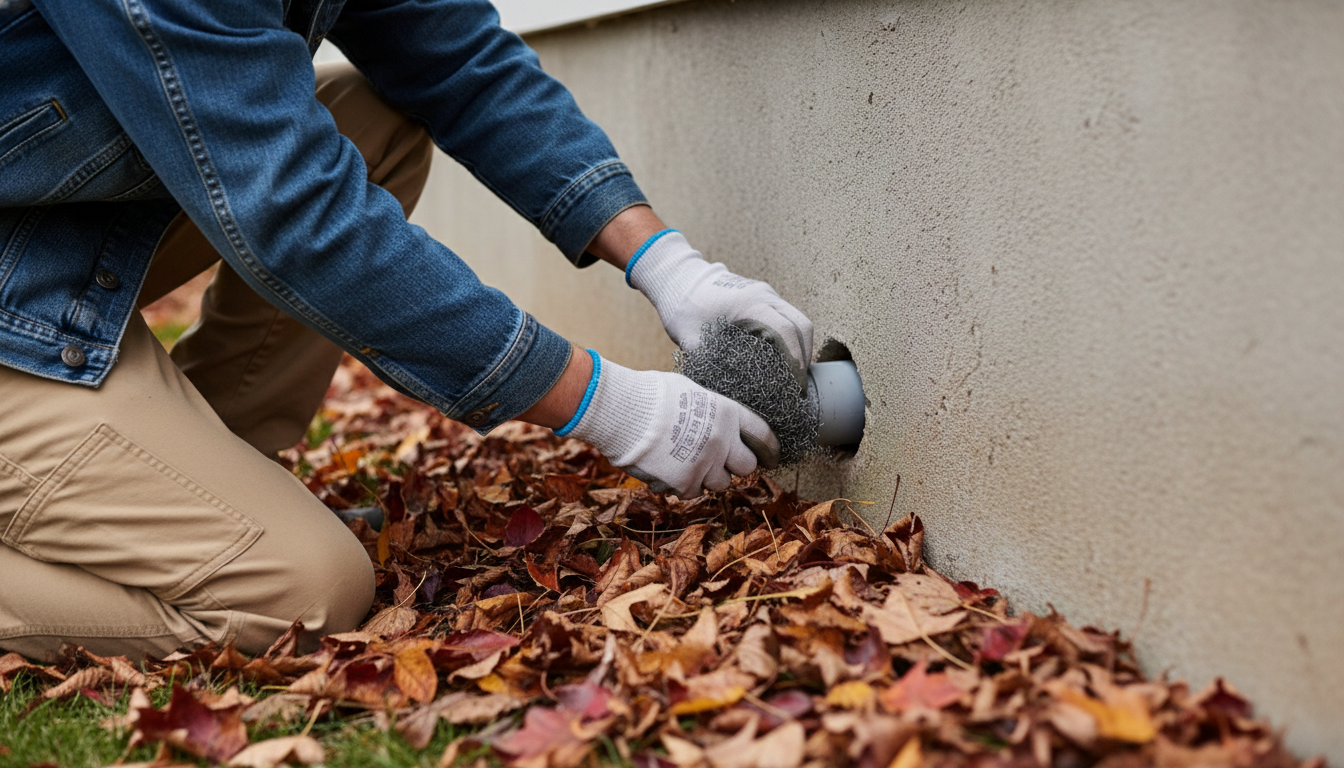
- Weep holes — in brick veneer construction, these drainage openings are sized perfectly for mouse entry
The Exterior Inspection: A Systematic Walk-Around
The best time for an exclusion inspection is early fall (September–October), before cold weather drives rodents indoors. The inspection should be systematic, covering the entire perimeter of the home at three levels:
Foundation level (ground to 2 feet)
- Walk the entire foundation perimeter looking for cracks, gaps, and openings
- Check where all pipes, wires, and conduits enter the foundation
- Inspect basement window wells and covers
- Look for gnaw marks, droppings, or rub marks (dark grease stains) along walls and edges
Wall level (2 feet to eave line)
- Inspect all vent covers (dryer, bath fan, range hood, attic gable vents)
- Check where siding meets trim, windows, and doors
- Look for gaps where utility meters are mounted
- Inspect hose bibs and exterior faucets
Roof level
- Check all roof-to-wall intersections
- Inspect ridge vents, soffit vents, and turbine vents for damage
- Look for gaps at chimney flashing
- Check where satellite dishes or antenna mounts are bolted through the roof or siding
Sealing Materials: What to Use Where
| Material | Best For | Cost | Notes |
|---|---|---|---|
| Steel wool (coarse) | Stuffing into gaps around pipes before sealing with caulk | $3–$8 | Rodents cannot chew through; rusts over time so pair with sealant |
| Copper mesh (Stuf-fit) | Same as steel wool but more durable | $8–$15 | Does not rust; preferred for long-term sealing |
| Silicone caulk | Sealing small gaps (< 1/4 inch) around trim, pipes, and windows | $5–$10/tube | Flexible and weather-resistant; use over steel wool for larger gaps |
| Expanding foam (pest-block) | Larger gaps and voids around pipes and wiring | $5–$12/can | Use pest-blocking formula (contains bittering agent); standard foam can be chewed through |
| Hardware cloth (1/4" galvanized) | Covering vents, weep holes, and larger openings | $10–$25/roll | Must be 1/4" mesh or smaller; 1/2" allows mice through |
| Metal kick plates / door sweeps | Exterior door bottoms and garage doors | $10–$30 | Rubber sweeps wear out; metal or reinforced rubber lasts longer |
Interior Prevention
Exclusion keeps rodents out; interior prevention removes the incentive to come in:
- Store food in airtight containers — glass, metal, or heavy plastic. Mice can chew through cardboard and thin plastic bags
- Keep pet food sealed and don't leave it out overnight
- Fix plumbing leaks — rodents need water daily and are attracted to dripping pipes
- Reduce clutter — especially in basements, attics, and garages where nesting material accumulates
- Store firewood at least 20 feet from the home and elevate it off the ground
- Clean under appliances — crumbs behind the stove and refrigerator attract foraging rodents
Signs of an Existing Infestation
If any of these signs are present during the inspection, trapping should happen before or concurrently with exclusion (sealing rodents inside is counterproductive):
- Droppings — mouse droppings are 1/4 inch, dark, pointed; rat droppings are 3/4 inch, blunt-ended
- Gnaw marks — fresh gnaw marks are light-colored; older marks darken
- Rub marks — dark grease stains along baseboards and walls from repeated travel paths
- Nesting material — shredded paper, fabric, or insulation in hidden areas
- Sounds — scratching, scurrying, or squeaking in walls or ceilings, especially at night
- Urine odor — a strong, musky smell, particularly in enclosed spaces
When to Call a Professional
DIY exclusion is effective for most single-family homes with minor gaps and no active infestation. Professional services are recommended when:
- An active infestation is present (trapping + exclusion should be coordinated)
- Entry points are on the roof or require ladder work
- The home has numerous penetrations or complex construction (older homes, additions)
- Previous DIY attempts have failed
- Rats (not just mice) are involved — rats are larger, more aggressive, and can cause more extensive damage
Professional exclusion services typically include a thorough inspection, all sealing work, and a warranty period (commonly 1 year) during which the company will return if rodents re-enter through sealed points. Costs range from $400 to $1,500 depending on home size and the number of entry points identified.
Related Articles

Why Pest Control Companies Are Booming: Industry Trends for 2026
Key Takeaways The U.S. pest control industry generates over $24 billion in annual revenue and has ...

Pest Control for New Homeowners: Your First-Year Checklist
Key Takeaways Schedule a professional pest inspection within the first 30 days of homeownership — ...
How Much Does Pest Control Cost in 2026? A Complete Pricing Guide
Key Takeaways The average one-time pest control treatment costs $150–$350, while quarterly service...