
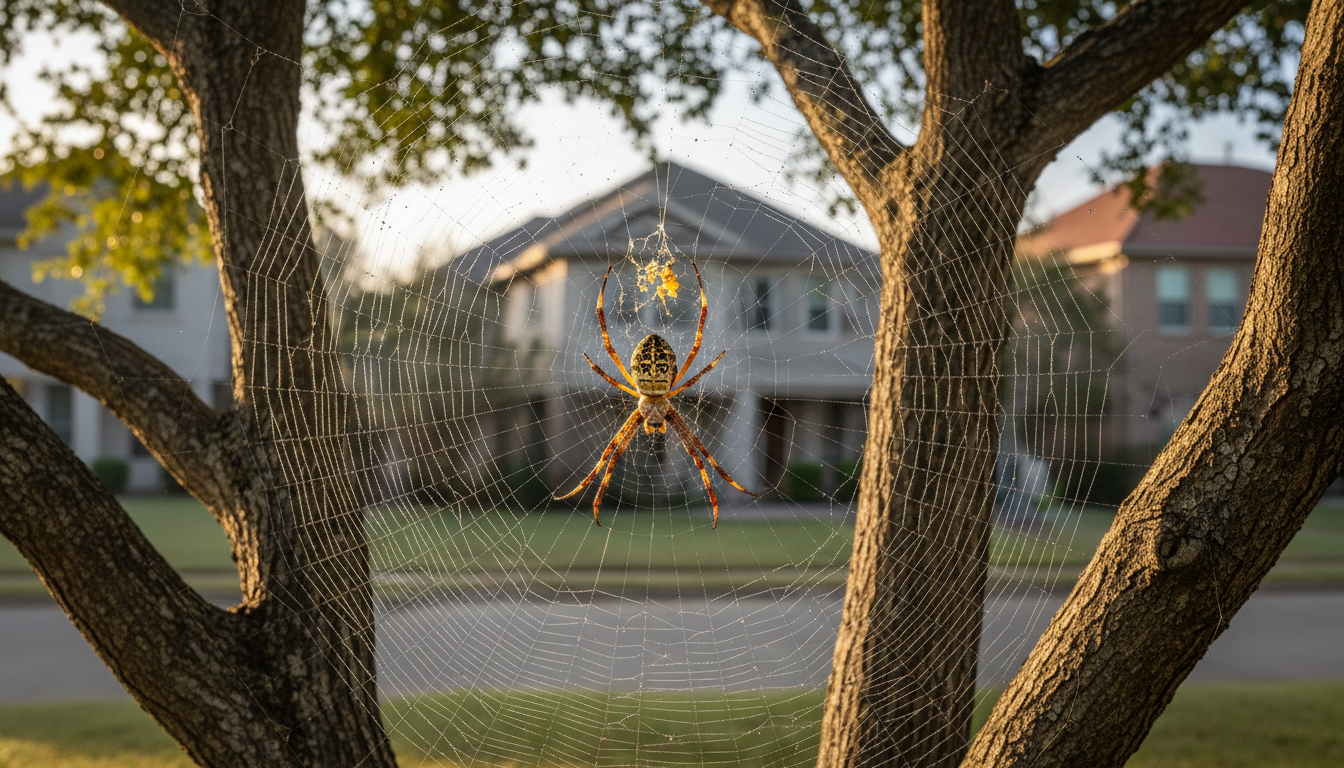
The Joro Spider, Spotted Lanternfly, and 5 Other Invasive Pests Spreading Across America
- Invasive insects cost the U.S. economy an estimated $70 billion annually in agricultural losses, infrastructure damage, and control efforts.
- The Joro spider has spread across 120,000+ square kilometers of the eastern U.S. since arriving from East Asia around 2013.
- The spotted lanternfly is now confirmed in one-third or more of U.S. states, causing hundreds of millions in agricultural damage.
- A hybrid Formosan/Asian termite species discovered in 2025 is potentially more destructive than either parent species.
- Climate change and global trade are accelerating the rate of new invasive species introductions.
The United States faces an accelerating wave of invasive pest species. Global trade, international travel, and shifting climate patterns have created conditions that allow non-native insects and arachnids to establish populations far from their regions of origin. According to USDA estimates, invasive insects collectively cost the U.S. economy approximately $70 billion per year in agricultural losses, infrastructure damage, and control efforts.
Here are seven invasive pests that are actively expanding their range across America — what they are, where they're spreading, and what homeowners and communities should know.
1. Joro Spider (Trichonephila clavata)
Origin: East Asia (Japan, China, Korea, Taiwan)
First detected in U.S.: 2013, northeastern Georgia
Current range: 120,000+ square kilometers across Georgia, South Carolina, North Carolina, Tennessee, and expanding into Maryland, Virginia, and potentially northward
The Joro spider has captured public attention due to its size — females have a body length of about 1 inch with leg spans reaching 3–4 inches — and its golden-hued webs that can span 6–10 feet. Research from the University of Georgia suggests the Joro spider is more cold-tolerant than its relative the golden silk spider, giving it the potential to survive in much of the eastern United States.
Threat level for homeowners: Low. Joro spiders are not aggressive and their venom is not medically significant to humans. Their webs are a nuisance on porches, eaves, and between structures, but they may actually benefit gardens by consuming stink bugs, mosquitoes, and other pests.
2. Spotted Lanternfly (Lycorma delicatula)
Origin: China, India, Vietnam
First detected in U.S.: 2014, Berks County, Pennsylvania
Current range: Confirmed in one-third or more of U.S. states, with established populations in PA, NJ, NY, CT, DE, MD, VA, WV, OH, IN, and others
The spotted lanternfly is an agricultural catastrophe in slow motion. This planthopper feeds on the sap of more than 70 plant species, including grapevines, fruit trees, hardwoods, and hops. Its feeding produces a sticky substance called honeydew that promotes sooty mold growth, damaging plants and outdoor surfaces.
Economic impact: Hundreds of millions of dollars in agricultural losses. Pennsylvania alone estimates $324 million in annual economic impact. The grape and wine industry is particularly affected.
What homeowners should do: Learn to identify and destroy egg masses (smooth, mud-like patches on flat surfaces — tree trunks, outdoor furniture, vehicles). Report sightings in new areas to state agriculture departments. Use sticky bands on trees to capture nymphs (with wildlife guards to prevent bird entanglement).
3. Formosan/Asian Hybrid Termite
Origin: First documented in 2025, southern Florida
Current range: South Florida; potential for expansion throughout the Gulf Coast
In what entomologists have called a concerning development, researchers documented the first known hybrid between Formosan subterranean termites (Coptotermes formosanus) and Asian subterranean termites (Coptotermes gestroi) in southern Florida. Both species are among the most destructive termites in the world individually. Preliminary research suggests the hybrid colony may grow twice as fast as either parent species.
Threat level: High for homeowners in southern Florida and the Gulf Coast. Subterranean termites already cause the majority of the $5 billion in annual U.S. termite damage. A faster-growing hybrid species could significantly increase that figure in affected regions.
4. Asian Giant Hornet (Vespa manducinia)
Origin: East Asia and Southeast Asia
First detected in U.S.: 2019, Washington State
Current status: Officially eradicated from the U.S. following a 4-year effort by USDA and Washington State Department of Agriculture (declared eradicated in 2024)
The "murder hornet" — which measures up to 2 inches long and can destroy honeybee colonies — represents a rare success story in invasive species management. After detecting multiple nests in Whatcom County, Washington, state and federal agencies conducted an aggressive detection and eradication campaign using radio-tagged hornets, thermal imaging, and nest destruction.
Current threat: Minimal, but continued vigilance is warranted. The species is well-established in British Columbia, Canada, and reintroduction is possible through natural range expansion or accidental transport.
5. Asian Longhorned Tick (Haemaphysalis longicornis)
Origin: East Asia
First detected in U.S.: 2017, New Jersey
Current range: Confirmed in 19+ states, primarily in the eastern U.S.
Unlike native tick species, the Asian longhorned tick can reproduce asexually — a single female can lay up to 2,000 eggs without mating. This capability allows populations to explode rapidly. While this tick has not yet been confirmed as a significant vector for Lyme disease in the U.S., it carries SFTS virus (severe fever with thrombocytopenia syndrome) in Asia, which has a 12–30% fatality rate.
Threat level: Moderate and potentially escalating. The tick feeds on livestock, wildlife, and humans. Its impact on cattle — causing anemia through mass feeding — is already a concern for livestock producers.
6. Red Imported Fire Ant (Solenopsis invicta)
Origin: South America
First detected in U.S.: 1930s, Mobile, Alabama
Current range: Established across the Southeast, Texas, and southern California; expanding northward into Tennessee, North Carolina, Virginia, and southern Maryland
Fire ants are arguably the most established invasive pest on this list, having had nearly a century to spread. Their northward expansion continues, driven by warming winter temperatures. Fire ant stings send an estimated 80,000+ Americans to emergency rooms annually, and their mounds damage agricultural equipment, electrical systems, and landscapes.
What homeowners should know: Fire ant mounds can appear overnight and contain 100,000–500,000 workers. Broadcast bait treatments applied in spring and fall are the most effective management strategy for residential properties. Individual mound treatments with approved granular products are also effective.
7. Brown Marmorated Stink Bug (Halyomorpha halys)
Origin: East Asia (China, Japan, Korea)
First detected in U.S.: 1998, Pennsylvania
Current range: 46+ states
Now present in nearly every state, the BMSB has become a fixture of fall life in the Mid-Atlantic, Great Lakes, and Ohio Valley. Its agricultural impact ($37+ million per year in apple damage alone) and household nuisance impact (homes harboring thousands of overwintering bugs) make it one of the most consequential invasive introductions of the past 25 years.
Comparison Summary
| Species | Homeowner Threat | Agricultural Threat | Status |
|---|---|---|---|
| Joro spider | Low (nuisance) | None | Expanding rapidly |
| Spotted lanternfly | Moderate (outdoor surfaces) | Very High | Expanding rapidly |
| Hybrid termite | High (structural) | Low | Newly discovered |
| Asian giant hornet | Low (eradicated) | High (honeybees) | Eradicated from U.S. |
| Asian longhorned tick | Moderate (health) | Moderate (livestock) | Expanding |
| Fire ants | High (stings) | Moderate | Established, expanding |
| Stink bugs | Moderate (nuisance) | High | Established nationwide |
The trend is clear: the pace of new invasive pest introductions is accelerating, driven by global trade volumes and climate conditions that allow tropical and subtropical species to survive in previously inhospitable regions. For homeowners, awareness of emerging threats — and cooperation with state agriculture departments in reporting new sightings — is an increasingly important part of protecting both property and community.
Related Articles

Why Pest Control Companies Are Booming: Industry Trends for 2026
Key Takeaways The U.S. pest control industry generates over $24 billion in annual revenue and has ...

Pest Control for New Homeowners: Your First-Year Checklist
Key Takeaways Schedule a professional pest inspection within the first 30 days of homeownership — ...

How Much Does Pest Control Cost in 2026? A Complete Pricing Guide
Key Takeaways The average one-time pest control treatment costs $150–$350, while quarterly service...