
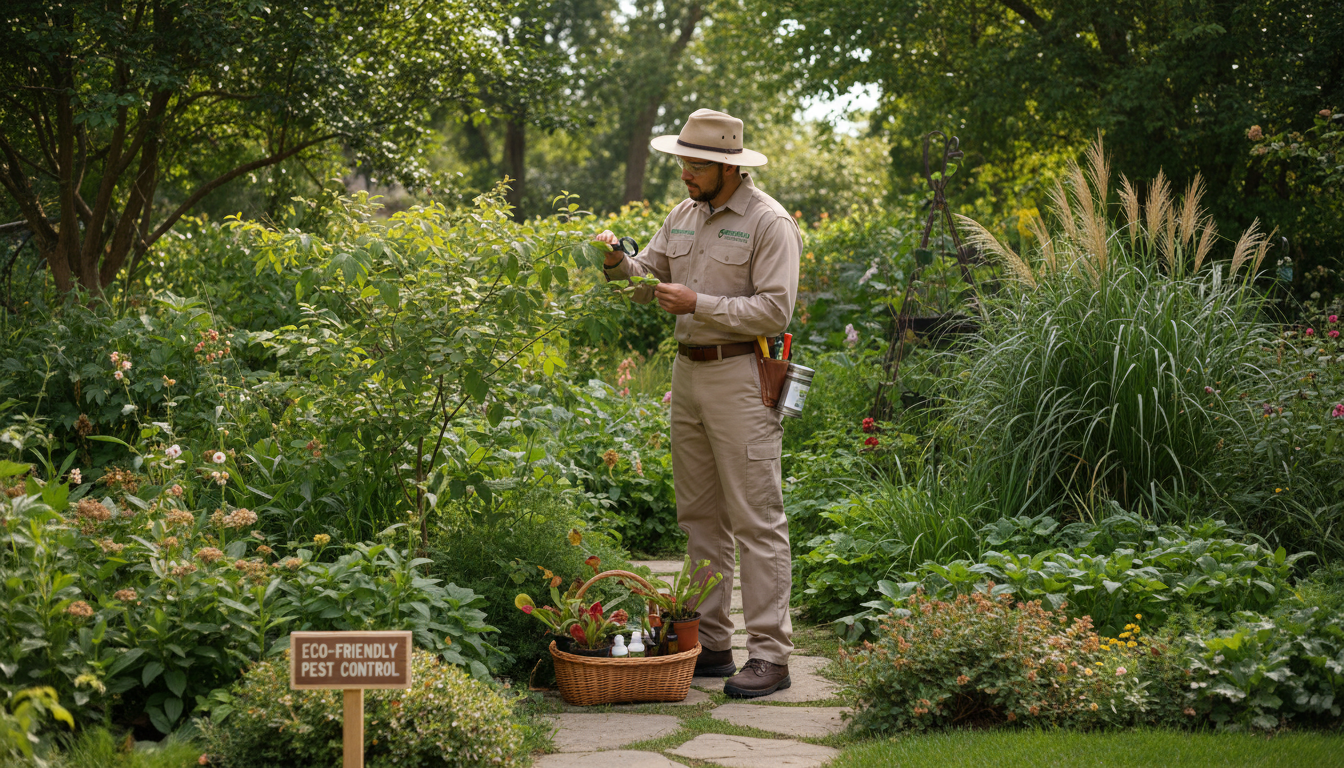
Green Pest Control and IPM: How to Differentiate Your Business and Charge More
When Integrated Pest Management first gained traction, most people in the industry dismissed it as hippie nonsense. Fast-forward to today, and the operators who adopted IPM early are commanding 20-35% price premiums, winning commercial contracts their competitors can't touch, and watching customer retention rates climb because clients feel better about the service they're paying for.
Green pest control isn't a trend — it's a structural market shift backed by consumer demand, regulatory pressure, and real science. The global biopesticides market alone is projected to reach $15.66 billion by 2029, growing at over 15% annually. If you're not positioning your company in this space, you're leaving money and market share on the table.
$15.66B
Projected Biopesticides Market by 2029
15.2%
Biopesticides Annual Growth Rate (CAGR)
39.5%
North America's Share of Global Biopesticides Revenue
What IPM Actually Means (And Doesn't Mean)
The biggest misconception needs to be addressed first: Integrated Pest Management does not mean "no chemicals." IPM is a decision-making framework that uses the most effective, least-risk approach to manage pest problems. Chemical treatments are absolutely part of the toolkit — they're just not the default first response.
The IPM hierarchy works like this:
- Inspection and monitoring — Identify the pest, the conditions enabling it, and the scope of the problem before taking any action.
- Prevention and exclusion — Seal entry points, eliminate food and water sources, modify habitat conditions. This is where most long-term value lives.
- Non-chemical interventions — Traps, physical barriers, biological controls, sanitation improvements.
- Targeted chemical application — When needed, use the most targeted, lowest-risk product in the most precise manner possible.
The key insight is that IPM typically delivers better results than spray-and-pray because it addresses root causes rather than just symptoms. Customers who understand this are willing to pay more because they're getting a genuinely superior service — fewer pest callbacks, longer-lasting results, and reduced chemical exposure for their families or employees.
Key Takeaway
IPM is not about using fewer chemicals for marketing purposes. It's about using a science-based decision-making process that produces better pest control outcomes while minimizing unnecessary risk. The premium pricing follows naturally because the service is genuinely more effective.
The Three Major Green Certifications (And Which One to Get)
Certification matters because it converts your operational practices into a marketing credential that customers and commercial clients recognize. Here are the three programs worth pursuing:
GreenPro Certified (NPMA)
GreenPro is the most widely recognized green certification in the pest management industry and the only program to have received an award from the Environmental Protection Agency. It's administered by the National Pest Management Association (NPMA) through the QualityPro program.
Requirements:
- You must first earn QualityPro accreditation (which itself requires background checks, drug testing, training standards, and insurance verification).
- Demonstrate IPM-based service delivery focused on habitat modification, exclusion, sanitation, and monitoring.
- Complete GreenPro-specific training and documentation requirements.
Why it matters: GreenPro certification qualifies your services for LEED v4.1 compliance, which is a massive door-opener for commercial contracts with property managers, hospitality groups, and corporate campuses pursuing sustainability certifications. If you do any commercial pest control work, GreenPro pays for itself through contract access alone.
EcoWise Certified
EcoWise was the first structural IPM certification program in the country, developed in the San Francisco Bay Area. It's an independent third-party program that certifies individual practitioners — not just companies — as proficient in low-impact IPM techniques.
Requirements:
- Be registered with the County Agricultural Commissioner.
- Employ at least one EcoWise Certified IPM Practitioner.
- Document 10 IPM service visits following EcoWise standards.
- Maintain separate IPM records for at least 3 years.
Why it matters: EcoWise is particularly valuable in California and on the West Coast, where green certifications carry significant weight with both residential and institutional clients. San Francisco and other municipalities specifically reference EcoWise certification in their procurement requirements.
Green Shield Certified
Green Shield Certified is administered by the IPM Institute of North America. It focuses on verifying that pest management providers use IPM practices that reduce the need for pesticides in sensitive environments like schools, healthcare facilities, and multi-family housing.
Why it matters: Green Shield is the go-to credential for operators targeting institutional accounts — school districts, hospitals, government facilities — where pesticide reduction policies are increasingly common or mandated.
Pro Tip
Start with QualityPro + GreenPro if you serve a mix of residential and commercial clients. The QualityPro foundation forces operational improvements (background checks, training standards, consumer protection) that improve your business even beyond the green angle, and GreenPro opens LEED-qualified commercial accounts.
Biopesticides vs. Synthetic: What You Need to Know
Biopesticides — products derived from natural materials like bacteria, plant extracts, and minerals — are a growing piece of the IPM operator's toolkit. But let me be honest about their strengths and limitations.
Where Biopesticides Excel
- Bacillus thuringiensis (Bt) — Extremely effective for mosquito larvae control with zero impact on non-target organisms. This is a genuine game-changer for mosquito management programs.
- Diatomaceous earth — Excellent for crack-and-crevice applications where long-term residual is desired without synthetic chemistry.
- Botanical oils (rosemary, peppermint, cedarwood) — Effective as repellents and for contact kill of soft-bodied insects. Great for customers who want the lowest possible chemical profile.
- Beauveria bassiana — A fungal biopesticide gaining traction for bed bug and tick management.
Where Synthetics Still Win
- Heavy termite infestations — Fipronil and imidacloprid remain the gold standard for termite barriers. Biopesticides don't yet offer comparable performance for subterranean termite management.
- Severe German cockroach infestations — Gel baits with conventional active ingredients still outperform botanicals in heavy infestations.
- Speed-of-kill situations — When a restaurant needs a cockroach problem resolved before tomorrow's health inspection, biopesticides often can't match the immediate knockdown of targeted synthetic applications.
The smart IPM operator carries both categories and selects based on the situation, the environment, and the customer's preferences — not ideology. This nuanced approach is exactly what differentiates you from both the spray-everything crowd and the all-natural purists.
How to Price Green Services for Premium Margins
Here's where it gets interesting financially. Green and IPM-focused pest control commands premium pricing for three legitimate reasons:
- Higher labor investment per stop. IPM requires thorough inspections, documentation, exclusion work, and monitoring. This genuinely takes more time than a spray-and-go approach.
- Better materials. Biopesticides, monitoring devices, and exclusion materials often cost more per unit than generic synthetic sprays.
- Specialized expertise. Your certification, training, and knowledge base represent real value that generalist operators can't replicate overnight.
In practical terms, operators with green certifications report charging 20-35% more than their non-certified competitors for comparable services. For a residential quarterly service priced at $100 by a conventional operator, a GreenPro-certified company can charge $120-$135 and see strong close rates from the right customer segment.
20-35%
Typical Price Premium for Certified Green Pest Control Services
Use our ROI Estimator to model how a premium pricing strategy affects your bottom line over 12 months.
Marketing the Green Angle
Having the certification is step one. Making it sell is step two. Here's what actually works in marketing green pest control:
Lead With Outcomes, Not Ideology
Don't lead your marketing with "we're eco-friendly." Lead with "we solve your pest problem with fewer chemicals in your home." The distinction matters. Parents don't buy green pest control because they want to save the planet — they buy it because they don't want their toddler crawling on a carpet that was just sprayed with synthetic pesticides. Frame every message around the customer's benefit.
Leverage Your Certifications in SEO
Terms like "green pest control near me," "eco-friendly exterminator," and "organic pest control [city]" are growing search queries with significantly less competition than generic pest control terms. Build dedicated landing pages for each certification you hold, and make sure your local SEO strategy incorporates these terms.
Target the Right Customer Segments
Green pest control resonates strongest with:
- Families with young children or pets
- Organic food and health-conscious households
- LEED-certified buildings and property managers
- Schools and daycare facilities
- Restaurants and food processing facilities with sustainability initiatives
- Corporate campuses with ESG commitments
Pro Tip
Put your GreenPro or EcoWise certification logo on your service vehicles, uniforms, website header, and every proposal. Visual credibility markers close deals. Customers can't assess your IPM knowledge during a sales call, but they can see a third-party certification badge and immediately associate your company with quality and environmental responsibility.
Regulatory Advantages of the IPM Approach
The regulatory landscape is moving in your favor if you adopt IPM now. Here's what's happening:
- Neonicotinoid restrictions: Multiple states have restricted or banned outdoor neonicotinoid applications. Operators already trained in alternative approaches face zero disruption when these regulations take effect.
- School and daycare pesticide laws: Over 30 states now have laws governing pesticide use in and around schools. Many mandate IPM-based approaches. If you're already certified, you're compliant by default.
- EPA registration trends: The EPA is fast-tracking biopesticide registrations while tightening review of conventional chemistries. The product pipeline increasingly favors IPM operators.
- Municipal procurement policies: Cities including San Francisco, New York, and Portland require or prefer IPM-certified vendors for government pest control contracts.
Operators who build IPM competency now are positioning for a regulatory environment that will increasingly require it. Those who wait will be forced to adapt reactively — always a more expensive proposition.
Building Your Green Service From Scratch: A 6-Month Plan
If you're a conventional operator wanting to add green capabilities, here's a realistic implementation timeline:
Months 1-2: Foundation
- Enroll in QualityPro and begin the accreditation process.
- Train your lead technicians in IPM principles — use NPMA or university extension courses.
- Audit your current product inventory and identify biopesticide alternatives for your top 5 service scenarios.
Months 3-4: Certification
- Complete QualityPro accreditation requirements.
- Apply for GreenPro certification.
- Begin piloting IPM-focused service on a subset of willing customers (offer it at current pricing to build experience and case studies).
Months 5-6: Launch
- Build dedicated green service pages on your website.
- Create a green service tier in your pricing structure.
- Train your sales team on presenting the green option and handling the "why does it cost more?" question.
- Update vehicle wraps, uniforms, and marketing materials with certification logos.
Key Takeaway
Green pest control and IPM aren't about being soft on pests — they're about being smart about how you solve pest problems, commanding premium prices for superior service, and positioning your business on the right side of regulatory and consumer trends. The operators who embrace this now will own the market in five years.
Want to see how certified green operators in your area are positioning themselves? Browse our directory of 30,000+ pest control companies and study what's working in your market. And for the latest on where the industry is headed, check out our analysis of pest control industry trends.
Related Articles
Why Pest Control Companies Are Booming: Industry Trends for 2026
Key Takeaways The U.S. pest control industry generates over $24 billion in annual revenue and has ...

Pest Control for New Homeowners: Your First-Year Checklist
Key Takeaways Schedule a professional pest inspection within the first 30 days of homeownership — ...
How Much Does Pest Control Cost in 2026? A Complete Pricing Guide
Key Takeaways The average one-time pest control treatment costs $150–$350, while quarterly service...