
Bed Bugs by the Numbers: What Every Traveler and Renter Should Know
- Bed bugs are the most-searched pest in 32 of 50 U.S. states, yet only 29% of Americans can correctly identify one.
- Professional heat treatment typically costs $1,000–$3,000 per home, while chemical treatments range from $300–$1,500.
- Bed bugs are not a sign of poor hygiene — they hitchhike on luggage, furniture, and clothing regardless of cleanliness.
- Early detection dramatically reduces treatment costs and the scope of infestation.
- Renters and frequent travelers face the highest risk, and legal protections vary significantly by state and city.
Bed bugs have staged one of the most remarkable comebacks in modern pest history. Nearly eradicated in the United States by the 1950s thanks to DDT, these small, blood-feeding insects have surged back into homes, hotels, and apartments across the country. According to the National Pest Management Association (NPMA), more than 82% of pest control professionals treated bed bug infestations in the past year — making them one of the most commonly encountered pests in the industry.
Despite their prevalence, public understanding remains remarkably low. A Harris Poll conducted for the NPMA found that only 29% of Americans can correctly identify a bed bug when shown images of common household insects. This knowledge gap contributes to delayed detection, higher treatment costs, and faster spread through multi-unit housing.
The Scale of the Problem
Bed bug infestations have been reported in all 50 states, with urban areas experiencing the highest concentration. According to pest industry data, bed bugs represent the number-one pest search term in 32 of 50 states, generating roughly 62,000 monthly searches on Google alone.
The cities with the highest reported bed bug activity, according to Orkin's annual rankings, consistently include:
| Rank | City | Notable Factor |
|---|---|---|
| 1 | Chicago, IL | Consistent #1 for bed bugs multiple years |
| 2 | New York, NY | Highest density of multi-unit housing |
| 3 | Philadelphia, PA | Older housing stock increases risk |
| 4 | Cleveland, OH | Rising caseload year over year |
| 5 | Detroit, MI | High percentage of rental housing |
Identification: What Bed Bugs Actually Look Like
Adult bed bugs are roughly the size of an apple seed — about 4–5 millimeters long — with flat, oval, reddish-brown bodies. After feeding, they swell and become more elongated and darker in color. Nymphs (juveniles) are smaller, translucent, and much harder to spot with the naked eye.
Common signs of an infestation include:
- Dark spots on mattress seams, sheets, or headboards (fecal staining)
- Shed skins — pale, translucent exoskeletons left behind as nymphs grow
- A sweet, musty odor in heavily infested rooms
- Bite patterns — often appearing in clusters or lines on exposed skin
- Live bugs hiding in mattress seams, box springs, bed frames, and behind baseboards
It's worth noting that bed bug bites are not a reliable indicator on their own. According to dermatological research, approximately 30% of people show no visible reaction to bed bug bites, meaning infestations can grow undetected for weeks.
How Bed Bugs Spread
Contrary to popular belief, bed bugs are not attracted to dirt or filth. They are attracted to carbon dioxide, body heat, and blood — which means any occupied space is a potential habitat. Common vectors include:
- Travel — Hotels, Airbnbs, and hostels are primary pickup points. Bugs hide in luggage, clothing, and personal items.
- Used furniture — Secondhand mattresses, couches, and bed frames are among the highest-risk items.
- Multi-unit housing — Bed bugs travel through wall voids, electrical outlets, and plumbing chases between apartments.
- Public transit and shared spaces — Movie theaters, offices, and public transportation have all documented cases.
The Hotel Problem: What Travelers Should Know
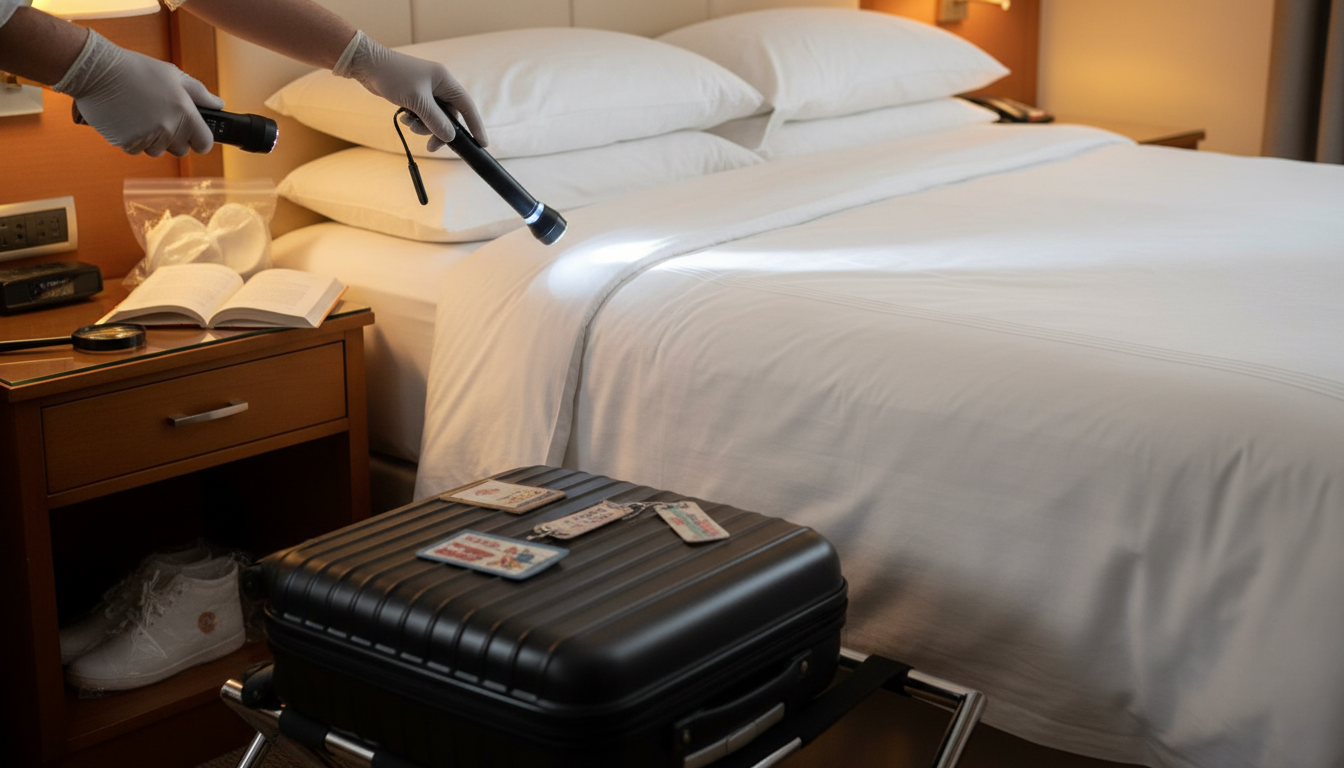
The NPMA survey found that only 28% of travelers inspect hotel rooms for bed bugs before settling in. Given that hotels are one of the primary vectors for spreading infestations to homes, this gap in behavior represents a significant risk.
Travel experts and entomologists recommend a consistent inspection routine:
- Place luggage on the bathroom tile (not the bed or carpet) upon arrival
- Pull back bed sheets and inspect mattress seams, especially at corners and around the headboard
- Check behind the headboard if it can be pulled away from the wall
- Look for dark spots or shed skins on the box spring, bed frame, and nightstand
- Use the luggage rack (after inspecting it) instead of placing bags on the floor
Upon returning home, pest management professionals recommend washing all travel clothing on the highest heat setting the fabric allows and inspecting luggage before bringing it inside.
Treatment Options and Costs
| Treatment Type | Typical Cost | Effectiveness | Notes |
|---|---|---|---|
| Heat treatment | $1,000–$3,000 | 95–100% in one session | Kills all life stages including eggs |
| Chemical treatment | $300–$1,500 | 85–95% with follow-ups | Requires 2–3 visits; doesn't kill eggs on first pass |
| Fumigation | $2,000–$6,000+ | 99–100% | Used for severe, whole-building infestations |
| DIY (sprays, traps) | $20–$200 | Low (10–30%) | Often delays professional treatment; can spread bugs |
Pest management experts consistently advise against DIY approaches for bed bugs specifically. Unlike ants or spiders, bed bugs have developed resistance to many over-the-counter pesticides, and improper application often causes bugs to scatter deeper into wall voids — making professional treatment more difficult and expensive.
The Renter's Dilemma
Bed bugs disproportionately affect renters. Multi-unit apartment buildings create ideal conditions for spread, and the question of financial responsibility often becomes contentious between tenants and landlords.
Key legal considerations:
- In most states, the implied warranty of habitability requires landlords to maintain pest-free conditions
- Cities including New York, Chicago, San Francisco, and Maine have specific bed bug ordinances placing responsibility on landlords
- Some states allow landlords to charge tenants if the infestation can be traced to the tenant's actions (e.g., bringing in used furniture)
- Documentation — photos, written complaints, dated records — is critical for protecting tenant rights
Myths vs. Reality
Myth: Bed bugs only live in dirty homes
Reality: Bed bugs are equal-opportunity pests. Five-star hotels, college dormitories, and luxury apartments have all reported infestations. Cleanliness has no bearing on attraction — only access to a blood meal matters.
Myth: Bed bugs transmit diseases
Reality: While bed bugs are known to carry at least 27 human pathogens, the CDC and EPA note there is no confirmed evidence of disease transmission through bites. The primary health impacts are allergic reactions, secondary infections from scratching, and significant psychological distress including insomnia and anxiety.
Myth: Sleeping with the lights on deters bed bugs
Reality: Bed bugs are primarily nocturnal but will feed during the day if hungry. Light does not prevent feeding.
Early Detection Strategies
The most cost-effective approach to bed bugs is catching them early. A single-room infestation detected within the first few weeks can often be treated for $300–$500, while a multi-room infestation left untreated for months can cost $2,000–$6,000 or more.
Recommended detection tools include:
- Interceptor traps placed under bed legs ($15–$30) — passive monitors that catch bugs moving to and from the bed
- Mattress encasements ($30–$60) — reduce hiding spots and make inspections easier
- Regular visual inspections — monthly checks of mattress seams, headboards, and baseboards
- Professional canine inspections ($200–$500) — trained dogs can detect bed bugs with 90%+ accuracy, even behind walls
What to Do if Bed Bugs Are Found
- Don't panic or start throwing away furniture — most items can be treated and saved
- Document everything — photograph evidence, note dates, and keep records for landlords or hotel management
- Contact a licensed pest control professional — request a free inspection to confirm identification and assess scope
- Avoid spreading the infestation — don't move items to other rooms, and don't sleep in a different room (this causes bugs to follow)
- Prepare for treatment — follow the pest control company's preparation checklist carefully, as improper prep reduces treatment effectiveness
Bed bugs are a solvable problem, but they require professional intervention, patience, and informed action. The gap between public awareness and the reality of these pests remains one of the biggest obstacles to effective control — a gap that data and education can help close.
Related Articles

Why Pest Control Companies Are Booming: Industry Trends for 2026
Key Takeaways The U.S. pest control industry generates over $24 billion in annual revenue and has ...

Pest Control for New Homeowners: Your First-Year Checklist
Key Takeaways Schedule a professional pest inspection within the first 30 days of homeownership — ...

How Much Does Pest Control Cost in 2026? A Complete Pricing Guide
Key Takeaways The average one-time pest control treatment costs $150–$350, while quarterly service...