
How to Get Rid of Moles: Lawn Damage Control & Removal Guide
Talpidae
How to Identify Moles
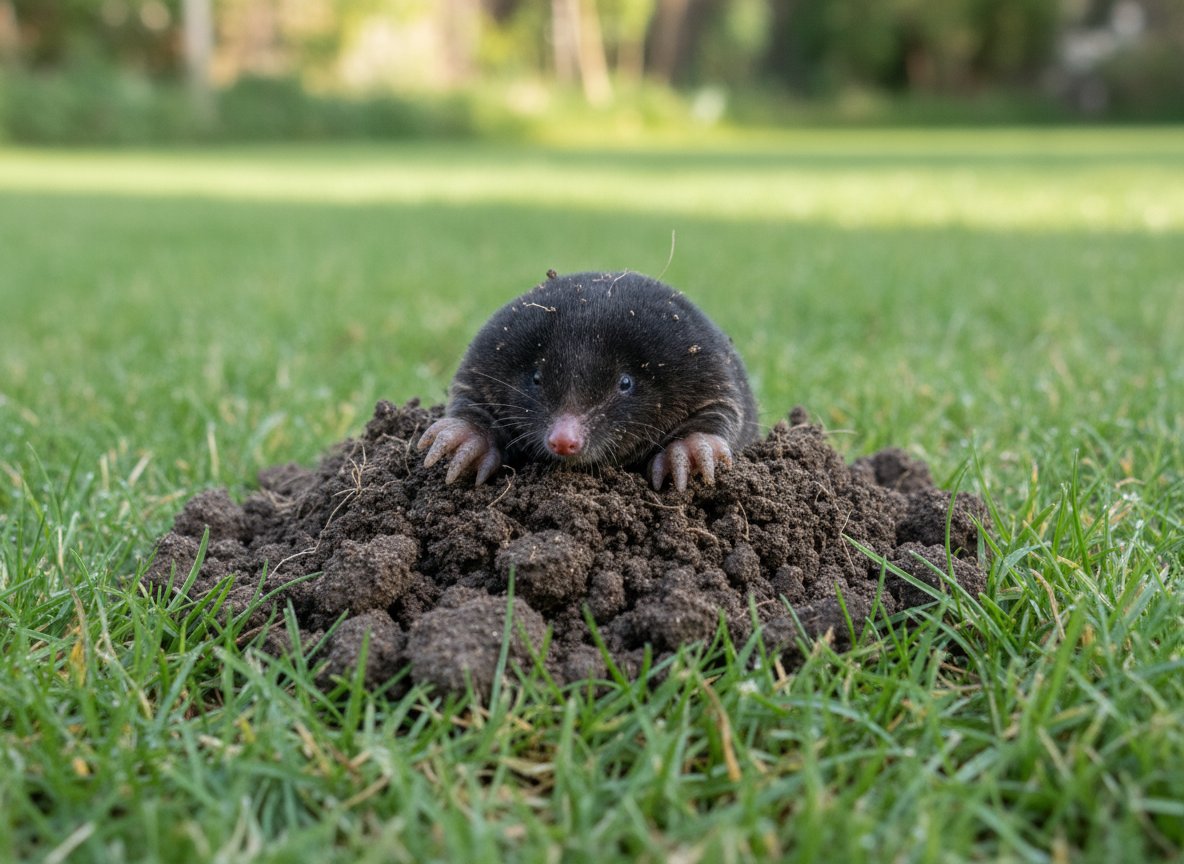
Moles are small, insectivorous mammals that live almost entirely underground. The most common species in the U.S. is the eastern mole (Scalopus aquaticus), found throughout the eastern two-thirds of the country. The star-nosed mole is found in the Northeast, and several species of western moles inhabit the Pacific states. Moles are 5-8 inches long with velvety gray to dark brown fur, tiny eyes (nearly hidden), no visible ears, and distinctive oversized front paws shaped like paddles with large claws designed for digging.
Moles are often confused with voles (small mouse-like rodents that use mole tunnels) and gophers (larger burrowing rodents that create fan-shaped soil mounds). Key differences: moles eat insects and earthworms (not plants), create raised surface ridges and round volcano-shaped mounds, and have paddle-shaped front feet. Voles eat plant roots and bulbs, create small surface runways in grass, and look like small mice. Gophers eat plant roots, create crescent or fan-shaped mounds with a visible plug, and are much larger than moles.
Despite their small size, moles are incredibly efficient diggers — a single mole can tunnel up to 18 feet per hour and create 100 feet of new tunnel per day. They are solitary animals (except during spring breeding season), so what seems like extensive damage from many moles is often caused by just one or two individuals. Moles are active year-round but their tunneling is most visible in spring and fall when they work closer to the surface following earthworm and grub activity in moist soil.
Signs of a Moles Infestation
The most obvious sign of mole activity is raised surface tunnels (feeding runs) that create visible ridges across your lawn. These meandering, slightly raised trails mark shallow tunnels where moles hunt for earthworms and grubs just below the surface. The soil above these tunnels feels soft and spongy underfoot. New tunnels may appear overnight, especially after rain when worms move closer to the surface.
Molehills are conical, volcano-shaped mounds of excavated soil, typically 6-24 inches in diameter and 2-8 inches tall. These are created when moles push excess soil from deeper tunnels to the surface. Molehills differ from gopher mounds — mole mounds are symmetrical and conical with the exit hole in the center, while gopher mounds are fan-shaped with the hole offset to one side. Multiple mounds connected by surface ridges confirm mole activity.
Secondary signs include areas of dead or yellowing grass where mole tunnels have separated grass roots from soil contact. Sections of lawn may feel squishy or collapse underfoot where extensive tunnel networks exist beneath the surface. You may also notice increased vole or mouse activity, as these rodents often use mole tunnels as highways. Moles themselves are rarely seen above ground — if you see a small, dark, velvet-furred animal scurrying across the yard, that is likely a mole caught in the open during tunnel expansion.
Health & Property Risks
Moles are primarily a lawn and landscape nuisance rather than a health or structural hazard. Their tunneling damages lawns aesthetically, creates uneven surfaces that are tripping hazards, disrupts plant root systems, and can undermine garden beds, walkways, and patio edges. Surface tunnels dry out grass roots, causing brown streaks across otherwise healthy lawns. For homeowners who invest significantly in lawn care, mole damage can be particularly frustrating and costly to repair.
While moles themselves eat insects and earthworms (not plants), their tunnels create pathways that voles exploit to access plant roots and bulbs. Voles traveling through mole tunnels can destroy flower bulbs, damage vegetable gardens, and girdle the roots of trees and shrubs. This secondary vole damage is often incorrectly attributed to the moles. The distinction matters because treating for moles (insectivores) requires different methods than treating for voles (herbivores).
Moles do provide some ecological benefits — their tunneling aerates soil, improves drainage, and they consume large quantities of grubs, beetle larvae, and other soil pests. A single mole eats 70-100% of its body weight in insects daily. In some cases, the presence of moles indicates a healthy soil ecosystem. However, when mole activity is concentrated in maintained lawns, golf courses, athletic fields, or landscaped areas, the aesthetic and functional damage typically outweighs any benefits, warranting control measures.
DIY vs. Professional Treatment
Mole control is one of the more challenging DIY pest problems because moles live underground, are rarely seen, and are resistant to many commonly marketed repellent products. The most effective DIY method is trapping, which requires learning to identify active tunnels, properly setting scissor-jaw or harpoon-style traps, and checking them daily. To find active runs, flatten a section of surface tunnel and check after 24-48 hours — if it is raised again, the run is active and worth trapping.
Castor oil-based repellents (such as Mole Max or Sweeney's Mole and Gopher Repellent) are the most proven DIY repellent option — they make soil and worm taste unpleasant to moles. Apply granular formulations to the lawn and water them in. Results are moderate and temporary (reapply every 4-6 weeks). Most other repellents (vibrating stakes, ultrasonic devices, chewing gum, mothballs, broken glass) have no scientific evidence of effectiveness. Grub control (applying products like GrubEx in late spring) can reduce one food source, but moles primarily eat earthworms, so eliminating grubs alone usually does not solve the problem.
Call a professional when: DIY trapping has not worked after 2-3 weeks of effort, mole damage is extensive or spreading rapidly, you want guaranteed results, or you are uncomfortable handling traps. Professional mole control operators use specialized trapping techniques and know how to read tunnel systems to achieve faster results. Some professionals offer baiting with bromethalin-based products (e.g., Talpirid), which resemble earthworms and are placed in active tunnels. Professional mole programs typically include a follow-up visit to confirm elimination and address any new activity.
Prevention Tips
Complete prevention of moles is difficult because you cannot fully control their underground movement across property lines. However, you can make your lawn less attractive and limit damage. Reduce soil moisture where possible — avoid overwatering lawns, fix irrigation leaks, and improve drainage in chronically wet areas. Moist soil attracts earthworms to the surface, which in turn attracts moles. Water deeply but infrequently rather than with frequent shallow watering.
Manage grub populations with a preventive grub control application (imidacloprid or chlorantraniliprole) in late spring to early summer. While earthworms are the mole's primary food, reducing grubs removes an additional food incentive. Keep in mind that eliminating grubs alone will not eliminate moles if earthworm populations remain high. Maintain a healthy, dense lawn — thick turf is more resilient to tunneling damage and recovers faster than thin, stressed grass.
For high-value areas like gardens and flower beds, install underground barriers of 1/4 inch hardware cloth buried 24 inches deep with a 6-inch L-shaped footer extending outward at the bottom. This prevents moles from tunneling into protected zones. Raised garden beds with hardware cloth bottoms are also effective. For persistent problems, consider a seasonal mole management contract with a professional — many wildlife companies offer spring and fall programs that include monitoring and trapping during peak activity periods, keeping mole numbers and damage under control year-round.
Treatment Costs
Professional mole removal typically costs $100 to $500 depending on the service model. Many mole control specialists charge a flat rate per visit of $100 to $200, which includes inspection, identifying active tunnels, and setting multiple traps. Follow-up visits to check and reset traps cost $75 to $150 each. A typical mole removal program requires 2-4 visits over 2-4 weeks to eliminate activity.
Some companies offer per-mole pricing, charging $50 to $150 per mole captured, with an initial setup fee. Others offer seasonal contracts at $300 to $800 per season (spring or fall), which include regular monitoring visits and trapping as needed — this is the best value for properties with recurring mole problems. Factors that affect cost include property size, severity of activity, accessibility of the lawn, and your geographic location.
See our full Mole Removal Cost Guide for detailed pricing by service type.
Frequently Asked Questions
Will grub killer get rid of moles?
Grub control alone usually does not eliminate moles because moles primarily eat earthworms, not grubs. Eliminating grubs removes one food source but earthworms are typically abundant enough to sustain moles regardless. Grub control is best used as one part of an integrated approach alongside trapping or professional removal.
How many moles are in my yard?
Probably fewer than you think. Moles are solitary animals, and what appears to be damage from many moles is often caused by just 1-3 individuals. A single mole can create 100 feet of new tunnel per day, so extensive tunnel networks do not necessarily mean a large population.
Do ultrasonic mole repellers work?
No. Scientific studies have consistently shown that ultrasonic vibrating stakes and similar devices do not effectively repel moles. Moles may temporarily avoid the area immediately around the device but simply tunnel around it. Save your money and invest in proven methods like trapping or professional removal.
Get a Free Moles Treatment Quote
Answer a few questions about your pest problem and get an instant price estimate, then get matched with licensed professionals in your area.
Get a Free QuoteFind Moles Exterminators Near You
Browse our directory of licensed pest control professionals who specialize in moles treatment.
Search Directory