
Bee Removal Guide: Safe Removal, Relocation & Prevention
Anthophila
How to Identify Bees
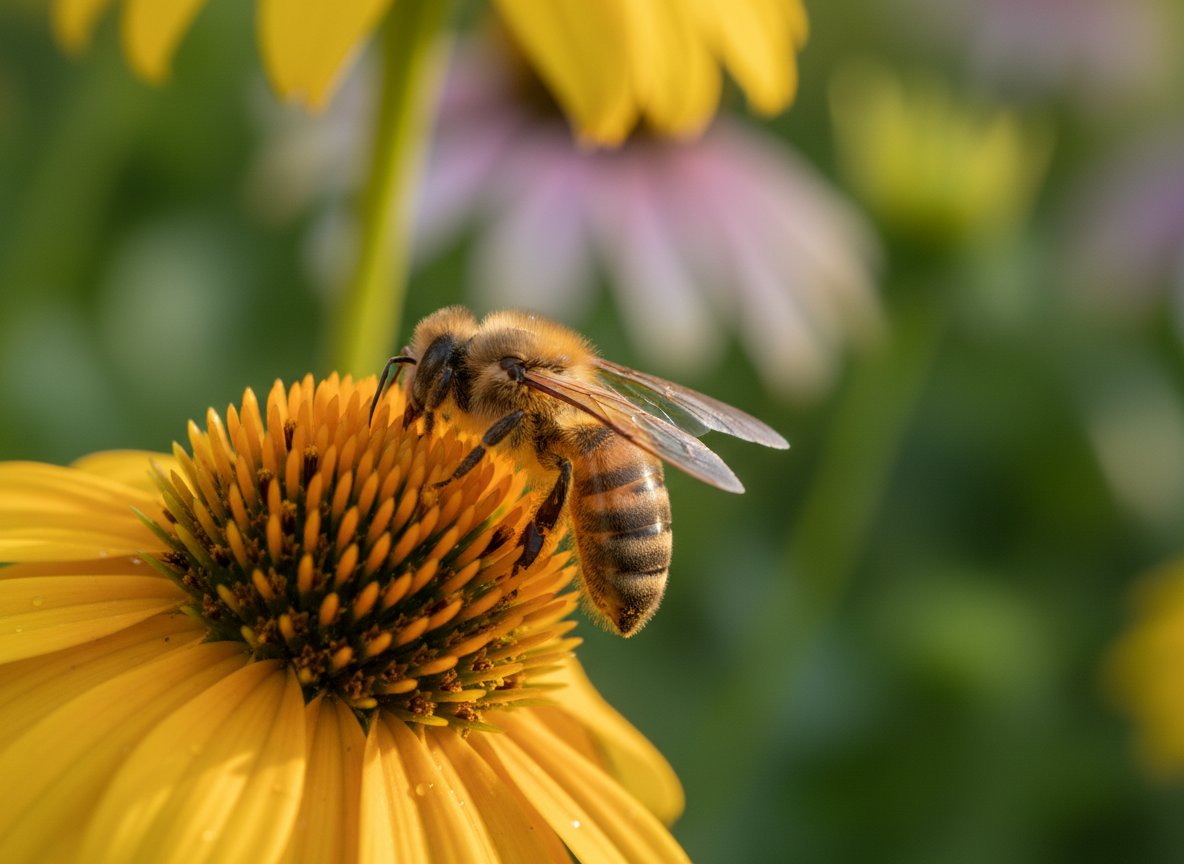
Several bee species commonly come into conflict with homeowners. Honeybees (Apis mellifera) are 12-15mm long, golden-brown with darker bands, and covered in fine hair. They form large perennial colonies (20,000-60,000+ bees) in enclosed cavities — including wall voids, soffits, and chimneys. Honeybee swarms (a cluster of bees hanging from a branch or structure) are a common spring sight as colonies reproduce by splitting.
Carpenter bees (Xylocopa species) are large (20-25mm), robust bees that resemble bumblebees but have a shiny, hairless black abdomen (bumblebees have a fuzzy abdomen). Carpenter bees bore perfectly round 1/2 inch holes into untreated wood — fascia boards, deck rails, eaves, and siding — to create nesting galleries. Males hover aggressively near nests but cannot sting. Females can sting but rarely do. Bumblebees (Bombus species) are large, fuzzy, and nest in small colonies (50-400 bees) in the ground, under decks, or in dense grass.
Ground-nesting bees (mining bees, sweat bees, and other solitary species) create small holes in bare or sandy soil in lawns and garden beds. They are mostly solitary — each female provisions her own nest — and are very docile, rarely stinging unless directly handled. It is important to distinguish bees from yellowjackets and wasps: bees are generally rounder, hairier, and less aggressive than wasps, and most bee species can only sting once (honeybees leave the stinger behind and die). Bees are critical pollinators, and removal should always prioritize relocation over extermination when possible.
Signs of a Bees Infestation
The most obvious sign is heavy bee activity around a specific area of your home or property. If you see dozens of bees flying to and from the same spot — a gap in your siding, a hole in the soffit, a crack in a wall — they likely have an established colony inside. Honeybees entering a wall void will create a visible "bee highway" with bees streaming in and out in a focused traffic pattern. A low humming or buzzing sound audible through walls or ceilings indicates a colony within the structure.
For carpenter bees, look for perfectly round 1/2 inch diameter holes in wood surfaces, often on the underside of fascia boards, deck rails, window trim, and unpainted wood structures. Fresh holes have clean, light-colored wood shavings (frass) below them. Males may be seen hovering and diving near the holes. Over multiple seasons, carpenter bee damage can become extensive as new bees reuse and extend existing galleries — tunnels can reach 6-10 feet in length inside wood members.
A bee swarm — a dense cluster of thousands of bees hanging from a tree branch, fence post, or building overhang — is a temporary phenomenon that occurs in spring as colonies reproduce. Swarms are generally docile (the bees have no hive to defend) and usually move on within 24-72 hours. However, if a swarm settles into a wall void, chimney, or other structural cavity, it will establish a permanent colony that requires professional removal. Honey stains on interior walls or ceilings, a sweet smell from wall cavities, or ants attracted to a wall area can all indicate an established honeybee colony with significant comb inside the structure.
Health & Property Risks
Bee stings cause pain and localized swelling in most people, but for the estimated 2 million Americans with bee sting allergies, they can trigger anaphylaxis — a life-threatening allergic reaction requiring immediate epinephrine and emergency medical care. Even people without known allergies can develop them after repeated stings, and the risk increases with multiple simultaneous stings. Africanized honeybees ("killer bees"), present in southern states, are more defensive than European honeybees and will pursue perceived threats in greater numbers, making accidental disturbance of their colonies particularly dangerous.
Structural damage is a significant concern with established honeybee colonies. A mature colony in a wall void can contain 60-80 pounds of honeycomb filled with honey, pollen, and brood (developing bees). If the colony dies or is killed without removing the comb, the wax melts in summer heat, releasing honey that drains through walls and ceilings — causing staining, attracting ants and other pests, and potentially causing mold. Carpenter bees cause direct wood damage by boring nesting galleries; while a single season's damage is cosmetic, years of accumulated tunneling can weaken structural and decorative wood elements.
Bees are essential pollinators, and their declining populations are a serious ecological concern. For this reason, responsible pest management prioritizes live removal and relocation over extermination whenever possible. Many communities have local beekeepers who will remove honeybee swarms and established colonies for free or at reduced cost. Bumble bees and ground-nesting solitary bees are especially valuable pollinators that rarely pose a stinging risk — in most cases, these bees should be left alone unless they are in a high-traffic area where stings are likely.
DIY vs. Professional Treatment
Bee removal is almost always a job for professionals. Honeybee colonies in wall voids require opening the structure to remove all comb and honey (leaving it causes major secondary problems), which demands carpentry skills, bee handling experience, and protective equipment. Attempting to seal bees inside a wall by blocking their entrance does not work — the bees will find or create another exit, often into the living space, and the trapped colony can die, leaving a mess of melting honeycomb inside the wall.
For swarms, contact a local beekeeper first — many beekeeping associations maintain swarm removal lists, and beekeepers often collect swarms for free because they are gaining a new colony. Swarms are typically gentle and a beekeeper can often collect one in under an hour. For carpenter bees, limited DIY treatment is possible: apply residual insecticide dust (such as Delta Dust) into the entrance holes in spring when bees are active, wait a few days, then plug the holes with steel wool and wood putty. Painting or staining all exterior wood surfaces is the best long-term carpenter bee deterrent, as they strongly prefer untreated wood.
Call a professional when: bees have established a colony inside a wall, ceiling, or chimney (structural opening and comb removal required), the colony is Africanized or extremely defensive, anyone in the household has a bee sting allergy, the colony is in a hard-to-reach location, or carpenter bee damage is extensive and involves structural wood. Professional bee removal specialists can perform live removals, relocating the colony to an apiary. Pest control companies handle situations where live removal is not feasible (e.g., colony inside a concrete block wall). Always ask if live removal is an option before agreeing to extermination.
Prevention Tips
Seal potential nesting sites before bees find them. Inspect the exterior of your home for gaps, cracks, and openings that could allow bees to access wall voids, soffits, and eaves. Seal gaps around plumbing penetrations, electrical conduits, and where different building materials meet. Ensure all vent screens are intact and openings are smaller than 1/4 inch. Check chimney caps and ensure flue dampers close completely. Old woodpecker holes and gaps in deteriorating trim are prime entry points for scout bees looking for colony sites.
To prevent carpenter bee damage, paint or stain all exterior wood surfaces, especially fascia boards, deck rails, window trim, and exposed structural wood. Carpenter bees strongly prefer bare, untreated softwoods (pine, cedar, redwood) and rarely bore into painted or stained surfaces. If you have decorative rough-sawn or natural wood elements, consider treating them with a wood preservative containing permethrin. Fill existing carpenter bee holes in fall (after the season ends) with steel wool and wood putty to prevent reuse the following spring.
Manage your property to reduce bee attractants in high-traffic areas. If ground-nesting bees are a concern in lawn areas used by children, maintain dense, well-watered turf — these bees prefer bare or sparse soil. Avoid planting heavily fragrant flowering plants directly adjacent to doorways, decks, and outdoor seating areas. Keep outdoor garbage sealed and clean up sugary drink spills promptly, as these attract foraging bees and wasps. If a swarm lands on your property, give it 24-72 hours before taking action — most swarms move on without intervention. If it stays, call a beekeeper for free relocation.
Treatment Costs
Bee removal costs vary dramatically depending on the situation. A swarm removal by a local beekeeper is often free to $150. Standard honeybee colony removal from an accessible location costs $200 to $500. However, removal of an established colony from inside a wall void — which requires opening the wall, extracting all comb, cleaning the cavity, and repairing the structure — typically costs $500 to $2,000 or more depending on the size of the colony and accessibility.
Carpenter bee treatment costs $150 to $500 for professional application of residual insecticide to active galleries, with the price depending on the number of holes and accessibility. Extensive carpenter bee damage requiring wood repair adds to the cost. Bumblebee or ground bee removal, when necessary, costs $100 to $300. Emergency bee removal (e.g., a colony near a school entrance or someone with a severe allergy) may carry a same-day surcharge of 30-50%.
See our full Bee Removal Cost Guide for detailed pricing by species and situation.
Frequently Asked Questions
Should I call an exterminator or a beekeeper for bee removal?
Start with a beekeeper — many will remove honeybee swarms and colonies for free or at low cost, and the bees are saved rather than killed. Contact your local beekeeping association for referrals. If live removal is not feasible (e.g., colony deep inside a wall), a pest control professional can handle the situation, but always ask about live removal options first.
How do I get rid of carpenter bees?
Apply residual insecticide dust into active bore holes in spring when carpenter bees are active. After a few days, plug the holes with steel wool and wood putty. The best long-term prevention is to paint or stain all exterior wood surfaces — carpenter bees strongly prefer bare, untreated wood and rarely attack painted surfaces.
Will a bee swarm go away on its own?
Usually yes. Bee swarms are temporary clusters that form when a colony splits. Scout bees search for a permanent home, and the swarm typically moves on within 24-72 hours. Leave it alone if it is not in a high-traffic area. If it settles into a wall or structure, call a beekeeper promptly before the colony becomes established.
Get a Free Bees Treatment Quote
Answer a few questions about your pest problem and get an instant price estimate, then get matched with licensed professionals in your area.
Get a Free QuoteFind Bees Exterminators Near You
Browse our directory of licensed pest control professionals who specialize in bees treatment.
Search Directory