
How to Get Rid of Bats: Safe Removal & Exclusion Guide
Chiroptera
How to Identify Bats
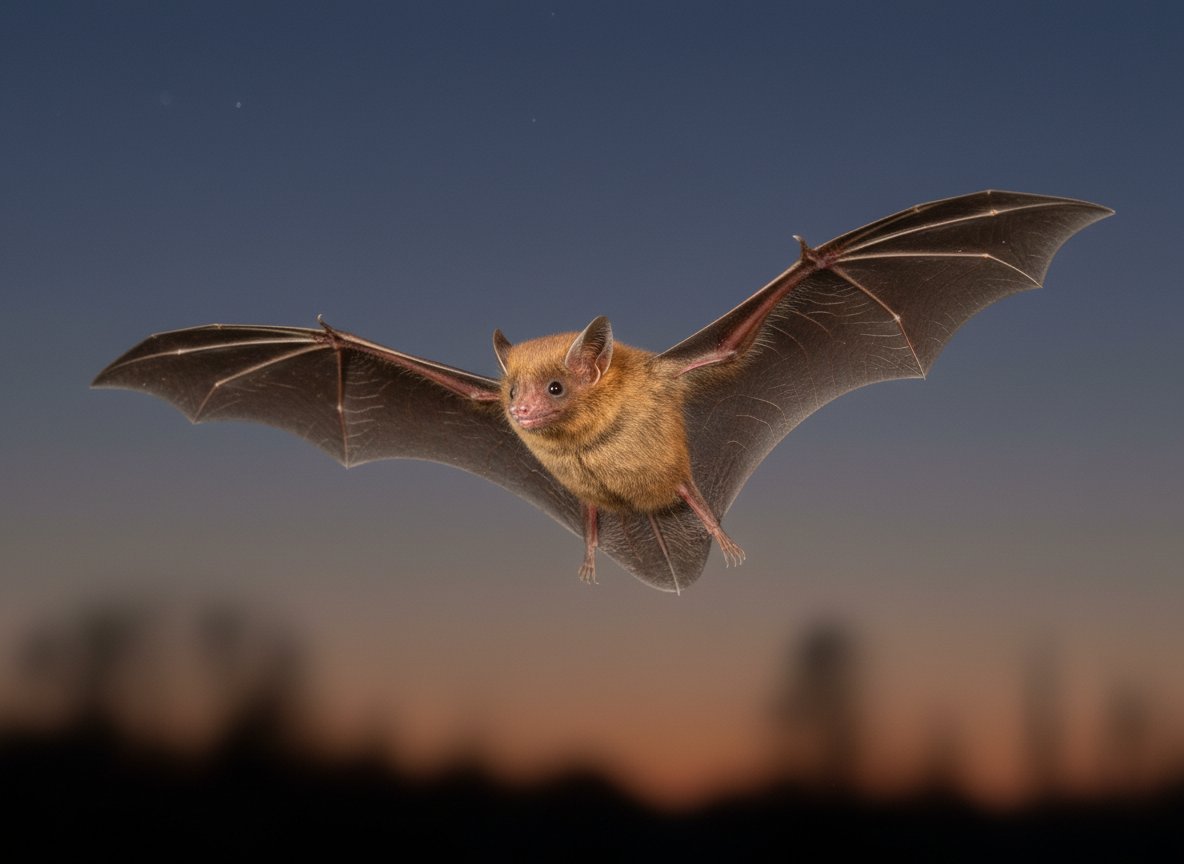
Bats are the only mammals capable of true sustained flight, belonging to the order Chiroptera. The most common species found in U.S. homes include the little brown bat (Myotis lucifugus), the big brown bat (Eptesicus fuscus), and the Mexican free-tailed bat (Tadarida brasiliensis). Little brown bats are small, measuring just 2-4 inches in body length with a wingspan of 8-11 inches, while big brown bats are larger at 4-5 inches with a 12-14 inch wingspan. Mexican free-tailed bats fall between the two at 3-4 inches with a 12-inch wingspan and are recognizable by their long, mouse-like tail that extends beyond the tail membrane.
All three species have brown to dark brown or grayish-brown fur, large ears relative to their head, and leathery, membranous wings stretched between elongated finger bones. Their small eyes are functional but they rely primarily on echolocation - emitting high-frequency sound pulses to navigate and hunt insects in total darkness. Bat wings are hairless and translucent, with visible veins, which distinguishes them from birds at a glance. When roosting, bats hang upside down by their hind claws, folding their wings tightly against their bodies.
It is important to distinguish bats from birds, which are sometimes confused at dusk. Bats have erratic, darting flight patterns compared to the smoother, more linear flight of birds. They are strictly nocturnal, emerging at dusk to feed and returning to roosts before dawn. A single bat can consume 600-1,000 mosquitoes per hour, making them ecologically valuable insect predators. If you are seeing flying animals entering or exiting your attic at twilight with erratic flight paths, you almost certainly have bats, not birds.
Signs of a Bats Infestation
The most telltale sign of a bat infestation is guano (bat droppings). Bat guano looks like dark, elongated pellets similar in size and shape to grains of rice, typically 4-8mm long. Unlike mouse droppings, bat guano crumbles easily when pressed and contains shiny, undigested insect fragments (wings and exoskeletons) visible under light. You will find guano accumulations below roosting points - check your attic floor, on top of insulation, on window sills, along exterior walls beneath entry points, and on porches or patios directly below eaves, soffits, or gable vents.
Other signs include urine stains and oily rub marks. Bat urine leaves dark, wet-looking streaks on walls, ceilings, and wood surfaces, and produces a strong ammonia smell that intensifies in warm weather. Bats also leave dark, greasy smudge marks around entry points from the oils in their fur, which accumulate over time as they squeeze through the same gaps nightly. Look for these brownish-black stains around gaps in soffit panels, along rooflines, at gable vent edges, and around chimney flashing. These rub marks are a reliable indicator of active entry points.
You may hear squeaking, chirping, or scratching sounds at dusk (when bats are waking and preparing to leave) and at dawn (when they return). These sounds often come from the attic, wall voids, or behind shutters. During summer maternity season, you may hear the higher-pitched calls of juvenile bats. If you see bats flying around your home at twilight, especially entering or exiting from a specific point on the roofline, you have a confirmed roost. A strong, persistent musty or ammonia-like odor emanating from the attic or walls is another reliable sign, caused by the accumulation of guano and urine over time.
Health & Property Risks
The primary health risk from bats is histoplasmosis, a respiratory illness caused by the fungus Histoplasma capsulatum, which grows in soil enriched by bat guano (and bird droppings). When accumulated guano is disturbed - during cleanup, attic renovation, or even from air currents - microscopic fungal spores become airborne and can be inhaled. Symptoms range from mild flu-like illness to severe, chronic lung infection. Immunocompromised individuals, the elderly, and young children are at greatest risk for serious complications. Large guano accumulations should never be disturbed without proper respiratory protection (N95 or P100 respirator at minimum) and ideally should be handled by professionals with HEPA filtration equipment.
Rabies is the most feared risk associated with bats, and while the actual incidence is low (less than 1% of bats carry the virus), bats are the leading cause of rabies deaths in the United States. A bat bite can be almost imperceptible - their teeth are tiny and sharp, and bites may not leave visible marks. This is why any bat found in a room with a sleeping person, an unattended child, or a person who is impaired must be captured and tested for rabies. If the bat cannot be captured, post-exposure rabies prophylaxis (PEP) is typically recommended. Never handle a bat with bare hands under any circumstances. If you must move a grounded bat, use thick leather gloves or contain it under a box.
Beyond disease, bat colonies cause significant structural damage over time. Guano and urine accumulation can saturate insulation (destroying its R-value and creating costly replacement needs), stain and deteriorate drywall ceilings, corrode wood and metal, and create persistent odors that permeate living spaces. Large colonies can deposit hundreds of pounds of guano over several years. Bats also carry ectoparasites including bat bugs (Cimex adjunctus, a close relative of bed bugs), bat mites, and bat ticks. When bats are excluded from a structure, these parasites lose their primary host and may migrate into living spaces, biting humans. Professional pest control for ectoparasites is often needed following bat exclusion.
DIY vs. Professional Treatment
Bats are legally protected in most U.S. states and under federal law. It is illegal to kill, poison, or use pesticides on bats in nearly all jurisdictions. The only legal and humane method of bat removal is exclusion - installing one-way devices (such as exclusion tubes, netting, or cones) over active entry points that allow bats to leave the roost but prevent them from re-entering, while simultaneously sealing all secondary entry points. Bat exclusion must be performed outside of maternity season (typically May through August) because during this period, flightless pups are present in the roost. Sealing adults out during maternity season traps the pups inside, where they die and create a severe odor and sanitation problem.
DIY bat exclusion is technically possible for handy homeowners with a small colony and easily accessible, clearly identifiable entry points. The process involves: (1) conducting a dusk watch over several evenings to identify all active entry/exit points, (2) sealing every secondary gap and crack larger than 3/8 of an inch with caulk, steel wool, hardware cloth, or expanding foam, (3) installing one-way exclusion devices over the primary entry points, (4) leaving the devices in place for 5-7 days minimum to ensure all bats have departed, and (5) permanently sealing the primary entry points. However, this process is fraught with challenges - missing even one secondary entry point means bats will find another way in, and the work often requires ladder and roof access.
Call a professional when: the colony is large (more than a dozen bats), entry points are on upper stories or steep rooflines, it is maternity season and exclusion must be timed carefully, you are unsure of all the entry points, guano cleanup is needed (requires respirators and HEPA filtration), you suspect rabies exposure, or ectoparasites (bat bugs or mites) are present. Professional wildlife control operators have the training, equipment, and licensing to perform exclusion legally and effectively, and many offer guarantees against re-entry. They can also handle the guano remediation, insulation replacement, and ectoparasite treatment that often accompanies bat exclusion.
Prevention Tips
The most effective bat prevention strategy is sealing all potential entry points before bats establish a roost. Bats can squeeze through gaps as small as 3/8 of an inch (roughly the width of a dime), so thorough inspection and sealing is essential. Focus on the roofline, where the most common entry points occur: gaps where soffit panels meet the fascia board, openings around ridge vents and gable vents, gaps in chimney flashing, cracks where dormers meet the main roof, and openings around pipes, wires, and utility penetrations. Use caulk, steel wool, hardware cloth (1/4-inch mesh), or copper mesh to seal gaps. Screen all attic vents and gable vents with hardware cloth if they are not already screened.
Cap chimneys with spark-arresting chimney caps that include mesh screening. Repair any damaged or rotting fascia boards, soffit panels, or roof sheathing promptly, as deteriorating materials create new entry points. Inspect the exterior of your home at least twice a year - once in early spring before bats arrive and once in late fall after they depart. Pay attention to any new gaps, cracks, or damage that may have developed. If your home has older construction with balloon framing, be aware that bats can enter at the roofline and travel down through wall voids to lower floors.
If you want bats on your property for insect control (a single bat colony can consume thousands of mosquitoes per night) but not in your house, consider installing a bat house as an alternative roosting site. Mount the bat house on a pole or the side of a building at least 15-20 feet above the ground, facing south or southeast to receive 6-8 hours of direct sunlight. Paint it a dark color (black or dark brown) in northern climates to absorb heat, which bats prefer. Place it at least 20 feet away from your home to discourage bats from returning to the structure. Bat houses are most effective when installed before or during exclusion work, giving displaced bats an immediate alternative roost. Reducing outdoor lighting near your home can also help, as bright lights attract the insects that attract bats.
Treatment Costs
Professional bat exclusion typically costs $300-$1,500 for a standard single-family home with a small to moderate colony and straightforward entry points. This includes a thorough inspection, identification of all entry and exit points, installation of one-way exclusion devices, sealing of secondary entry points, and return visits to remove devices and complete final sealing. Larger colonies, multi-story homes, or complex rooflines with numerous entry points can push exclusion costs to $1,500-$8,000 or more, particularly for historic homes, commercial buildings, or structures with extensive soffit and fascia damage.
Guano cleanup and remediation is typically a separate cost and adds $500-$5,000+ depending on the volume of guano, accessibility of the contaminated area, and whether insulation replacement is needed. Small accumulations in accessible attic areas cost $500-$1,500 to clean, while large accumulations requiring insulation removal and replacement can reach $3,000-$5,000 or more. This work requires specialized safety equipment including P100 respirators, Tyvek suits, and HEPA-filtered vacuums. Some companies offer bundled exclusion and remediation packages at a discount.
Factors that influence total cost include the size and height of the structure, the number of entry points, colony size, amount of guano, local labor rates, and whether ectoparasite treatment is needed after exclusion. Many wildlife control companies offer free inspections and detailed written estimates. Always verify that the company is licensed for wildlife control in your state and carries appropriate liability insurance. See our full Bat Removal Cost Guide for detailed pricing breakdowns by scenario.
Frequently Asked Questions
Is it legal to kill bats in my attic?
In most U.S. states, bats are protected wildlife and killing them is illegal. The only legal removal method is exclusion — using one-way devices that let bats leave but prevent re-entry. Poisoning or trapping bats can result in fines. Always check your state's wildlife regulations or hire a licensed wildlife control professional.
When is the best time to remove bats?
The best time for bat exclusion is late summer (August-September) after pups can fly, or early spring (March-April) before maternity season begins. Never exclude bats from May through July when flightless pups may be inside — sealing them in causes them to die and creates a much worse problem.
Can bat guano make you sick?
Yes. Bat guano can harbor the fungus Histoplasma capsulatum, which causes histoplasmosis — a respiratory illness. Never disturb large accumulations of guano without proper respiratory protection (N95 or P100 respirator). Professional guano cleanup with HEPA filtration is recommended for significant accumulations.
Get a Free Bats Treatment Quote
Answer a few questions about your pest problem and get an instant price estimate, then get matched with licensed professionals in your area.
Get a Free QuoteFind Bats Exterminators Near You
Browse our directory of licensed pest control professionals who specialize in bats treatment.
Search DirectoryRelated Pest Guides
Mice
Get rid of mice fast with our expert guide. Learn signs of mouse activity, humane and lethal control options, entry point sealing, and costs.
Wildlife (Raccoons, Squirrels, Opossums)
Safe wildlife removal for raccoons, squirrels, and opossums. Learn signs of wildlife in your home, humane removal options, and exclusion methods.